
I find nothing more comforting on a chilly evening than a steaming pot of hearty Korean army stew recipe, bubbling away on the stovetop. Its vibrant red broth, savory meats, and chewy noodles create an irresistible aroma that instantly makes your kitchen feel like home. This easy korean army stew recipe is perfect for busy families, home cooks exploring global flavors, and anyone craving a satisfying, simple meal. Our streamlined version cuts down on prep time without sacrificing that authentic, comforting taste. I’ll cover everything from ingredients and step-by-step instructions to serving suggestions and smart storage tips.
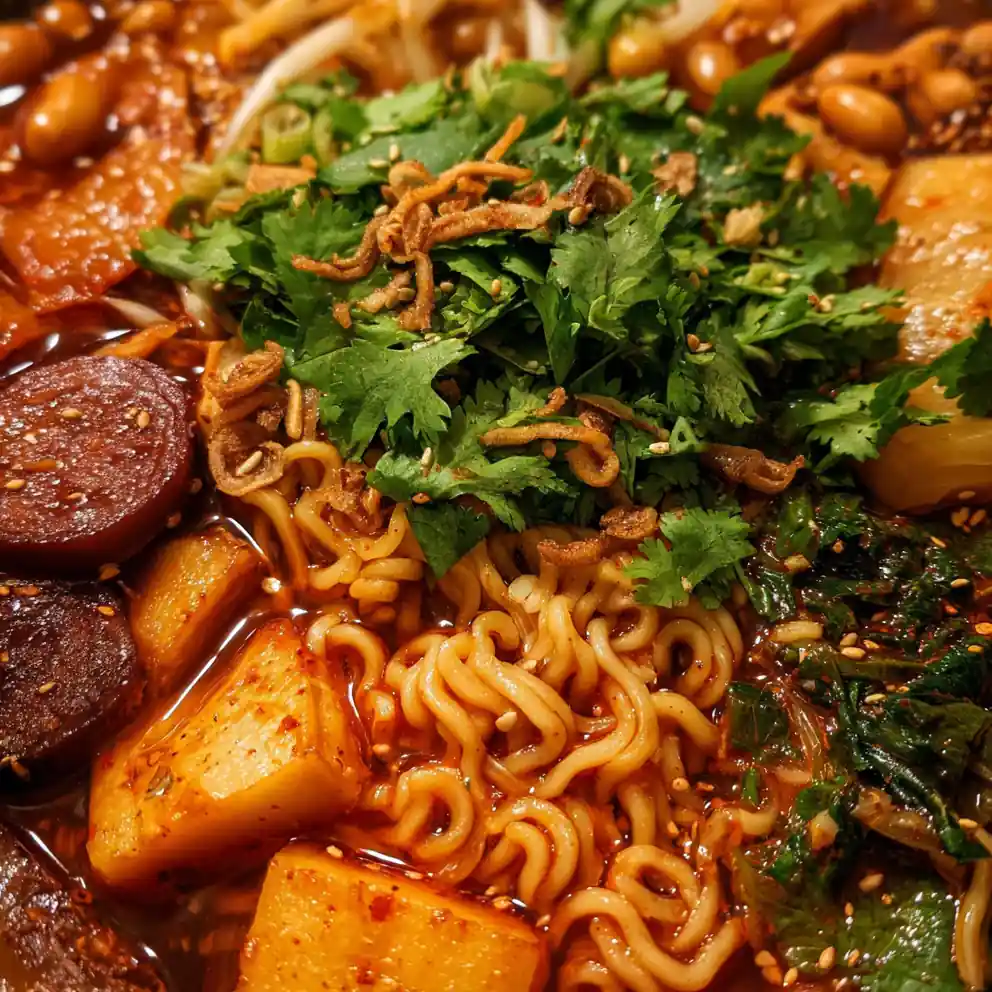
Ingredient Matrix (Measurements • Role • Swap)
Core Ingredients:
- 200 g (7 oz) Beef Luncheon Meat, thinly sliced • Savory, processed protein that anchors the dish.
(Swap: Use leaner chicken or turkey luncheon meat for a healthier option.) - 150 g (5 oz) Smoked Chicken Sausage, sliced on a bias • Adds a tender texture and mild smokiness.
(Swap: Omit or add extra tofu for a vegetarian twist.) - 200 g (7 oz) Firm Tofu, cut into 2 cm (3/4 inch) cubes • Absorbs all the delicious broth flavors and adds protein.
- 200 g (7 oz) Kimchi, roughly chopped • Fermented cabbage adds essential tangy, spicy depth to the Korean army stew recipe.
- 1 Large Onion, thinly sliced • Aromatic base for the stew.
- 100 g (3.5 oz) Shiitake Mushrooms, sliced • Earthy notes and meaty texture.
- 100 g (3.5 oz) Enoki Mushrooms, stems trimmed • Delicate texture and mild flavor.
- 100 g (3.5 oz) Napa Cabbage, roughly chopped • Adds fresh crispness and subtle sweetness.
- 200 g (7 oz) Canned Baked Beans in Tomato Sauce • Offers a unique sweetness and creamy texture to the broth.
- 2 Packs Instant Ramen Noodles (discard seasoning packets) • Classic, quick-cooking noodle base for satisfying chew.
Broth Base:
- 1 Head Garlic, unpeeled • Roasted for a mellow, sweet paste.
- 1.5 Liters (6 cups) Low-Sodium Vegetable Broth • The flavorful foundation for the entire stew.
- 60 g (1/4 cup) Gochujang (Korean chili paste) • Spicy, sweet, and savory thick paste, key to the stew’s character.
- 15 g (1 tbsp) Gochugaru (Korean chili flakes) • Adjust for desired heat.
- 15 mL (1 tbsp) Soy Sauce • Essential umami-rich seasoning.
- 5 mL (1 tsp) Smoked Paprika • Adds a subtle smoky complexity.
- 10 mL (2 tsp) Maple Syrup • Balances the spice and savory notes.
- 5 mL (1 tsp) Sesame Oil, plus extra for drizzling • Nutty aroma and flavor.
- Pinch Black Pepper • Enhances overall seasoning.
Upgrades and Alternates:
- Look for organic tofu and vegetables for a cleaner meal.
- Gluten-free ramen or sweet potato noodles can be used for dietary needs.
- Consider vegetable-based luncheon meat or extra mushrooms for a fully plant-forward stew.
Seasonal Picks and Quality Notes:
- Choose fresh, active kimchi from a Korean market or Asian grocery store for authentic flavor.
- Select firm or extra-firm tofu that holds its shape well during cooking.
- Fresh, vibrant mushrooms enhance both flavor and texture in this easy dinner idea.
Optional (plan-ahead): If you’re shopping for the week, I put this into a 4-Week Meal Plan + Grocery Lists so dinner’s already decided before your day gets busy.
Tools & Equipment (and Why They Help)
Essential Cookware:
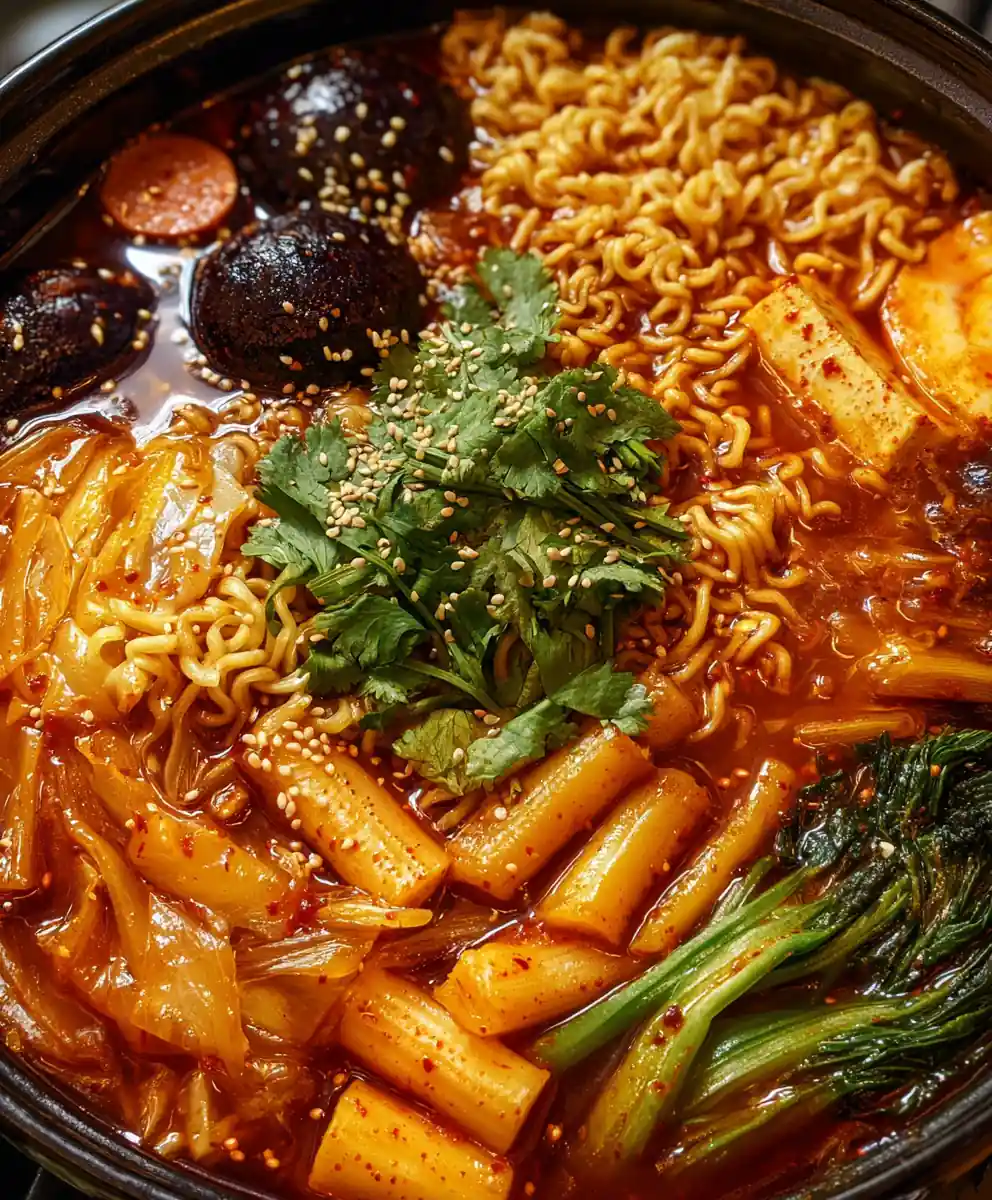
- Large shallow pot or dedicated hot pot (2-3 quart) • Ideal for even cooking and presenting this communal Korean army stew recipe on a tabletop burner.
- Cutting board and sharp knife • For safe and efficient preparation of all ingredients.
- Measuring spoons and cups • Ensures accurate seasoning for the best flavor balance in your broth.
Optional Gear for Speed or Consistency:
- Kitchen shears • A quick way to cut cooked ramen noodles or kimchi directly in the pot.
- Ladle • For easy serving from the hot pot, ensuring everyone gets a share of delicious broth and ingredients.
Safe Handling Reminders:
- Always use oven mitts or pot holders when handling hot pots or roasted garlic.
- Exercise caution with sharp knives during ingredient preparation to prevent accidents.
Step-by-Step Method with Sensory Cues
1. Prepare All Ingredients (5 minutes):
Preheat your oven to 200°C (400°F). Roast the garlic head for 30-40 minutes until very soft; its sweet aroma will fill your kitchen. Mash the cooled roasted garlic into a paste. Slice the beef luncheon meat, smoked chicken sausage, tofu, onion, shiitake, and trim enoki mushrooms. Chop the kimchi and Napa cabbage. Arrange all these ingredients, plus the baked beans, neatly in sections around the bottom of a wide, shallow pot.
2. Mix the Broth & Sauce (3 minutes):
In a small bowl, combine the mashed roasted garlic paste, gochujang, gochugaru, soy sauce, smoked paprika, maple syrup, sesame oil, and black pepper. Whisk this mixture well to create the rich, smoky gochujang sauce. It should have a vibrant red color and a pungent, spicy scent.
3. Assemble the Pot (2 minutes):
Pour the vegetable broth into the pot, ensuring the arranged ingredients are partially submerged. Dollop spoonfuls of the smoky gochujang sauce paste evenly over the ingredients in the center of the pot. The vibrant sauce will sit atop the ingredients, ready to blend into the broth.
4. Cook the Stew (15-20 minutes):
Bring the pot to a boil over medium-high heat until you see steady bubbling. Reduce heat to medium-low and simmer gently for 15 minutes, allowing all the robust flavors to meld beautifully. If desired, add the sliced red chili for extra heat and a visual pop. If the broth looks too thick or reduces too quickly, splash in an extra 1/4 cup of vegetable broth to maintain consistency.
5. Finishing Touches (1 minute):
Add the instant ramen noodles into the stew, gently pushing them into the broth. Scatter the cut green onions over the top. Continue to simmer for another 3-4 minutes, or until the noodles are tender and cooked through, visibly absorbing the flavorful broth. This makes a fantastic, family-friendly meal.
Inline Quick Variations:
- Spice Level: Add more gochugaru for extra heat, or reduce it for a milder, more kid-friendly taste.
- Smokiness Boost: For deeper smoky notes, add an extra pinch of smoked paprika to the sauce.
Mini Troubleshooting Callouts:
- Broth Too Salty: Add a bit more plain vegetable broth or water to dilute the flavor.
- Not Spicy Enough: Stir in an extra dash of gochugaru to taste until the desired heat is reached.
- Noodles Sticking: Gently agitate the noodles occasionally to prevent them from clumping together.
Best Ways to Serve & Store
This easy korean army stew recipe is perfect for cozy weeknight family dinners, fun weekend gatherings with friends, or even as a unique meal prep option. Serve it hot, directly from the pot, with communal spoons and individual bowls for a shared experience.
Traditionally, it’s served with fluffy steamed white rice to soak up all the flavorful broth. Fresh kimchi and a variety of banchan (small Korean side dishes) truly complete the meal. A light lager or a refreshing iced tea make great beverage choices alongside this hearty dish.
Allow any leftovers to cool completely. Transfer to airtight containers and store in the refrigerator for 3-4 days. For best results, reheat on the stovetop over medium heat, adding a splash of water or broth if needed to revive the texture and consistency. If freezing, freeze the broth and cooked ingredients separately (excluding ramen), and add fresh ramen when reheating; I’ve found this keeps the noodles from getting mushy.
Nutrition & Lifestyle Fit for Korean Army Stew Recipe
This korean army stew recipe is incredibly customizable to fit various diet needs. It’s naturally high-protein with ingredients like tofu and processed meats, and can be made lower-carb by increasing tofu and vegetable portions while reducing ramen. For vegetarian or vegan versions, swap out the processed meats for plant-based sausages or extra mushrooms and use vegetable broth. Gluten-free options are also available with specific noodle choices.
This hearty korean army stew recipe offers a satisfying balance of protein, carbohydrates, and vegetables, making it a filling and energizing meal. It’s a great healthy dinner idea when portions are managed and leaner proteins or extra veggies are included. Many components can be prepped ahead for quick meal prep during busy weeks, offering protein-rich options to keep you feeling full and satisfied. With careful ingredient choices, it can even be adapted for diabetic-friendly meals.
Budget & Time Snapshot
Prep Time: 15 minutes
Active Cooking Time: 20 minutes
Total Time: 35 minutes
Expect to spend about $4-6 per serving, depending on ingredient choices and store sales. This makes it a very budget-friendly meal for families.
- Opt for store-brand instant ramen and processed meats to save money.
- Buy kimchi in bulk from an Asian market for a better value.
- Use seasonal vegetables that are on sale to keep costs down.
Easily double the recipe in a larger pot to have leftovers for lunches or another dinner. The broth base can be made ahead and stored, significantly cutting down on active cooking time later for even quicker meals.
Ingredient Sourcing & Smart Buying
Visit your local Asian market for authentic kimchi, gochujang, gochugaru, and a wider variety of rice cakes and ramen, ensuring the best flavor for your korean army stew recipe. Larger supermarkets often carry many of these ingredients in their international aisle. Online Korean grocery stores offer convenient delivery for specialty items, perfect for busy lifestyles.
Fresh tofu and vegetables are recommended for the best flavor and texture. Canned Spam and sausages are standard for this dish and convenient for a quick meal. Instant ramen is key for ease and the traditional army stew experience.
Consider grocery delivery services for convenience, especially for heavier items or specialty ingredients. Look for organic picks for vegetables and tofu to enhance nutritional value for a healthier eating approach.
Pro Tips, Adjustments & Safety
- Layering ingredients strategically in the pot ensures even cooking and a beautiful presentation.
- Proper broth dilution is key; taste and adjust saltiness as you go.
- Browning some of the meats briefly before adding to the pot can add depth of flavor.
- For Kids: Reduce gochugaru significantly or omit, adding a touch of sugar for sweetness.
- Spice Lovers: Add extra gochugaru or fresh sliced chilies for an extra kick.
- Low-Sodium: Use low-sodium broth and soy sauce alternatives.
- Soy Allergy: Use coconut aminos instead of soy sauce.
- Gluten-Free: Opt for gluten-free ramen noodles (rice or sweet potato based) and carefully check labels on processed meats to ensure they are gluten-free.
FAQs
Is korean army stew recipe good for meal prep or weight goals?
Yes, components can be prepped ahead! For weight goals, portion control is key, and you can lean on more veggies and leaner proteins like chicken or extra tofu instead of processed meats. It’s a flexible recipe for healthy eating.
What are the healthiest substitutes for korean army stew recipe ingredients?
Swap Spam or sausages for lean chicken breast or extra firm tofu, use whole wheat ramen, add more fresh vegetables like spinach or bok choy, and opt for low-sodium broth. These choices enhance the nutritional profile of your korean army stew recipe.
Can I order korean army stew recipe ingredients online or use a meal kit?
Absolutely! Many online Asian grocery stores deliver specialty items right to your door, offering great convenience. Some meal kits also feature similar Korean hot pot dishes, providing a streamlined way to enjoy a delicious korean army stew recipe at home.
How spicy is this korean army stew recipe?
The spice level is adjustable! Our recipe uses a moderate amount of gochujang and gochugaru for a balanced flavor, but you can easily add more of the chili flakes for extra heat or reduce them for a milder, more family-friendly version. I like adding a bit more gochugaru for a kick!
Can I make this korean army stew recipe vegetarian?
Yes, it’s very adaptable! Substitute Spam and sausages with plant-based alternatives like vegetarian sausages or extra firm tofu, and load up on mushrooms and other vegetables. Be sure to use a good quality vegetable broth for the base.
What type of pot is best for this korean army stew recipe?
A wide, shallow pot or a traditional Korean hot pot is ideal. This design allows for even cooking and lets you arrange all the ingredients beautifully for a visually appealing meal. It also makes for a fantastic centerpiece when serving directly at the table.
Does korean army stew recipe freeze well?
While the broth and some cooked components can freeze, instant ramen noodles and tofu don’t typically hold up well to freezing and reheating, becoming mushy. It’s best to freeze the broth and other ingredients, then add fresh ramen and tofu when reheating from frozen for the best texture.
Conclusion
Ready to bring a burst of flavor and comfort to your dinner table? This easy korean army stew recipe offers a quick, satisfying, and budget-friendly meal solution for any busy household, truly a win for family dinners. Print this recipe now, add the ingredients to your next grocery list, and get ready to make this delicious stew a new family favorite!
Print
korean army stew recipe
- Total Time: 65 minutes
- Yield: 4 to 6 servings 1x
- Diet: General
Description
This easy Korean army stew recipe offers a comforting and hearty meal, featuring a vibrant red broth with savory meats, chewy noodles, and an array of fresh vegetables. It’s a streamlined version perfect for busy families and home cooks craving authentic global flavors without extensive prep time.
Ingredients
- 7 oz Beef Luncheon Meat, thinly sliced
- 5 oz Smoked Chicken Sausage, sliced on a bias
- 7 oz Firm Tofu, cut into 0.75 inch cubes
- 7 oz Kimchi, roughly chopped
- 1 Large Onion, thinly sliced
- 3.5 oz Shiitake Mushrooms, sliced
- 3.5 oz Enoki Mushrooms, stems trimmed
- 3.5 oz Napa Cabbage, roughly chopped
- 7 oz Canned Baked Beans in Tomato Sauce
- 2 Packs Instant Ramen Noodles (discard seasoning packets)
- 1 Head Garlic, unpeeled
- 6 cups Low-Sodium Vegetable Broth
- 0.25 cup Gochujang (Korean chili paste)
- 1 tbsp Gochugaru (Korean chili flakes)
- 1 tbsp Soy Sauce
- 1 tsp Smoked Paprika
- 2 tsp Maple Syrup
- 1 tsp Sesame Oil, plus extra for drizzling
- Pinch Black Pepper
- 1 Sliced Red Chili, optional
- 2 Green Onions, cut, for garnish
Optional (plan-ahead): If you’re shopping for the week, I put this into a 4-Week Meal Plan + Grocery Lists so dinner’s already decided before your day gets busy.
Instructions
- Prepare All Ingredients: Preheat oven to 400 F (200 C). Roast the garlic head for 30-40 minutes until very soft; mash the cooled roasted garlic into a paste. Slice the beef luncheon meat, smoked chicken sausage, tofu, onion, shiitake, and trim enoki mushrooms. Chop the kimchi and Napa cabbage. Arrange all these ingredients, plus the baked beans, neatly in sections around the bottom of a wide, shallow pot.
- Mix Broth and Sauce: In a small bowl, combine the mashed roasted garlic paste, gochujang, gochugaru, soy sauce, smoked paprika, maple syrup, sesame oil, and black pepper. Whisk this mixture well to create the rich, smoky gochujang sauce.
- Assemble the Pot: Pour the vegetable broth into the pot, ensuring the arranged ingredients are partially submerged. Dollop spoonfuls of the smoky gochujang sauce paste evenly over the ingredients in the center of the pot.
- Cook the Stew: Bring the pot to a boil over medium-high heat until you see steady bubbling. Reduce heat to medium-low and simmer gently for 15 minutes, allowing all the robust flavors to meld beautifully. If desired, add the sliced red chili for extra heat and a visual pop.
- Finishing Touches: Add the instant ramen noodles into the stew, gently pushing them into the broth. Scatter the cut green onions over the top. Continue to simmer for another 3-4 minutes, or until the noodles are tender and cooked through, visibly absorbing the flavorful broth.
Notes
To adjust spice, add more or less gochugaru. For deeper smokiness, add an extra pinch of smoked paprika. If broth is too salty, add more plain vegetable broth or water. If noodles stick, gently agitate them occasionally. Store leftovers in an airtight container in the refrigerator for up to 3 days. Consider using lean chicken or turkey luncheon meat, organic tofu and vegetables, or gluten-free ramen for dietary needs.
- Prep Time: 40 minutes
- Cook Time: 25 minutes
- Category: Main Course
- Method: Stovetop
- Cuisine: Korean
Nutrition
- Serving Size: 1 bowl (approx. 450 g)
- Calories: 550 calories
- Sugar: 20 g
- Sodium: 1200 mg
- Fat: 28 g
- Saturated Fat: 10 g
- Unsaturated Fat: 18 g
- Trans Fat: 0 g
- Carbohydrates: 65 g
- Fiber: 7 g
- Protein: 32 g
- Cholesterol: 75 mg
FREE PRINTABLE RECIPE
Get the Printable Recipe PDF (Free)
Enter your email and we’ll send you the ingredients + step-by-step instructions as a clean PDF you can save to your phone.
- ✅ Printable PDF (ingredients + steps)
- ✅ Save it to your phone (no long scrolling)
- ✅ Includes cook time + servings
- ✅ Easy to follow
FAQ
Where’s the full recipe?
It’s delivered as a printable PDF so you can save it and cook without scrolling.
I didn’t get the email.
Check Spam/Promotions and search your inbox for your site name. Then click Confirm to receive the PDF.