
I used to think making homemade kimchi was too complicated for a weeknight project, but this vegan version changed my mind.
Finding a delicious, authentic-tasting kimchi recipe vegan that doesn’t sacrifice the deep umami flavor of traditional versions can be tough, as fish sauce is usually a core ingredient. This recipe solves that problem by using a simple-to-make Black Garlic & Miso Umami Swirl. It adds rich, complex notes that make this version truly special, resulting in a bold, family-friendly kimchi that’s just as good—maybe even better—than the traditional version.
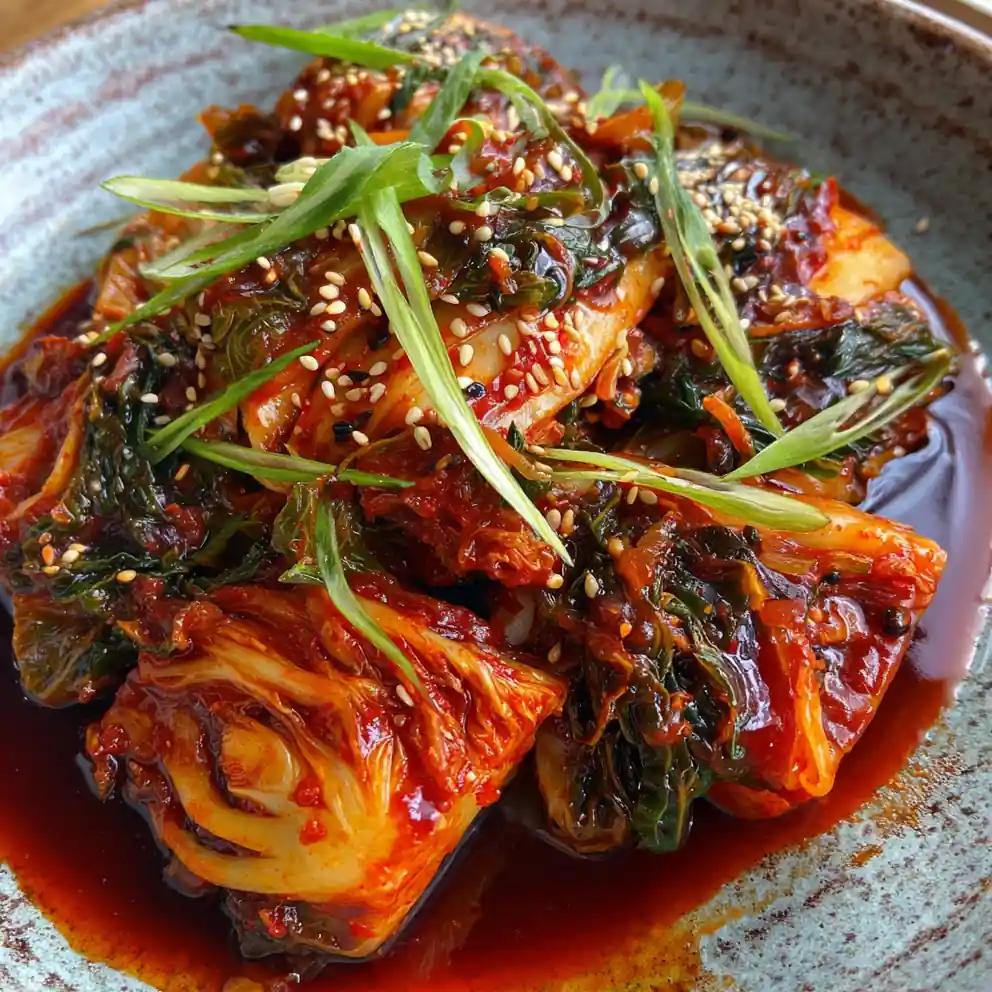
Ingredients
- Napa Cabbage: 2 kg (4.4 lbs) of firm, crisp napa cabbage. Look for heads that are dense and have pliable outer leaves. Coarse sea salt (100 g / ~1/2 cup) for brining.
- Fresh Vegetables: 200 g (7 oz) daikon radish and 100 g (3.5 oz) carrots, julienned. 6-8 stalks green onions, cut into 5 cm (2 inch) pieces. Julienne into thin matchsticks for even coating and fermentation.
- Main Kimchi Paste Base: 60 g (about 1/2 cup) gochugaru (Korean chili flakes), 8 cloves garlic (minced), 4 cm (1.5 inch) piece ginger (grated). 30 g (1/4 cup) glutinous rice flour for porridge base. Combine with 120 ml kombu dashi, 30 ml (2 tbsp) agave nectar (or maple syrup if that’s what’s available), 15 ml (1 tbsp) apple cider vinegar, and 10 g (1 tbsp) roasted shiitake mushroom powder (adds savory depth).
- Black Garlic & Miso Umami Swirl Paste: 30 g (1 oz) black garlic cloves, mashed. 30 g (2 tbsp) white miso paste. 15 ml (1 tbsp) agave nectar (or maple syrup), 15 ml (1 tbsp) tamari (alcohol-free), and 10 ml (2 tsp) toasted sesame oil. This swirl paste is crucial for the deep umami flavor in this specific kimchi recipe vegan.
Optional (plan-ahead): If you’re shopping for the week, I put this into a 4-Week Meal Plan + Grocery Lists so dinner’s already decided before your day gets busy.
Instructions
- Prepare Cabbage (Brining): Halve or quarter the napa cabbage lengthwise. Rub coarse sea salt generously between all the leaves, especially near the thick white parts. Let sit for 2-3 hours until the leaves are softened and pliable; turn the cabbage every hour. Rinse thoroughly 2-3 times to remove excess salt, then drain for 30-60 minutes.
- Make Rice Porridge & Dashi: Whisk 30g glutinous rice flour with 240ml cold water in a small saucepan. Cook over medium-low heat, stirring constantly for 3-5 minutes until translucent and thick. Let cool completely. Prepare kombu dashi by soaking a 10cm piece of kombu in 240ml water for 30 minutes, then gently heat to just simmering before removing the kombu. Let cool, as you will only use 120ml.
- Assemble Main Kimchi Paste: In a large mixing bowl, combine the cooled rice porridge and 120 ml kombu dashi. Whisk in the gochugaru, minced garlic, grated ginger, 30ml agave nectar, apple cider vinegar, and shiitake mushroom powder. Mix thoroughly until a uniform, vibrant red paste forms.
- Make Black Garlic Umami Swirl Paste: In a separate small bowl, combine the mashed black garlic cloves, white miso paste, 15ml agave nectar, tamari, and sesame oil. Mix until you have a smooth, thick, dark paste. I find using a small whisk ensures all the black garlic is incorporated smoothly into this essential part of my kimchi recipe vegan.
- Combine Vegetables: Add the julienned daikon and carrots along with the cut green onion pieces to the large bowl containing the main red kimchi paste. Mix thoroughly until all vegetables are evenly coated in the red paste.
- Apply Pastes to Cabbage: Wearing food-safe gloves, take a drained cabbage quarter and spread a thin layer of the main red paste over each leaf, working from the outer leaves inwards. Dot small amounts of the black garlic & miso swirl paste onto the leaves and spread gently to create dark ribbons and streaks. Repeat this process for all cabbage quarters. If you find the paste too thick to spread easily, add 1-2 teaspoons of water or additional kombu dashi to adjust the consistency.
- Ferment: Tightly pack the coated cabbage sections into a clean glass jar or container, pressing down firmly to remove air pockets. Ensure the kimchi is submerged in its own brine, leaving about 2.5 cm (1 inch) headspace. Seal loosely or use an airlock and ferment at cool room temperature (18-22°C / 65-72°F) for 2-5 days. Burp daily and taste after day 2 to check for sourness.
- Storage & Serving: Once a desired level of sourness is reached, transfer the jar to the refrigerator. The cold temperature slows down fermentation, allowing you to enjoy this delicious kimchi recipe vegan for several weeks. To serve, arrange in a bowl and drizzle with extra swirl paste for visual effect, garnished with toasted sesame seeds and green onions.
The Umami Secret: Black Garlic & Miso
The umami secret to this kimchi recipe vegan is replacing traditional fish sauce with black garlic and white miso. Black garlic, which is simply slow-fermented regular garlic, develops a deep, molasses-like sweetness and savory depth during the aging process. Miso paste adds a salty, fermented flavor that complements the black garlic perfectly, creating a complex, savory base for the kimchi. The swirl technique ensures a different flavor experience in every bite—a pop of deep umami alongside the refreshing heat of the main paste, making this specific vegan kimchi recipe truly unique.
Troubleshooting Your Vegan Kimchi Fermentation
If your kimchi tastes too salty after fermentation, ensure you rinsed the cabbage thoroughly after brining; this is a common issue for new fermenters. If it’s too bland, fermentation may have stalled; move the jar to a warmer spot (18-22°C / 65-72°F) or try a longer duration. Mold appearance requires discarding the batch (it’s rare if submerged properly), but a white film (kahm yeast) can be skimmed off the top; it’s harmless, though it can affect flavor.
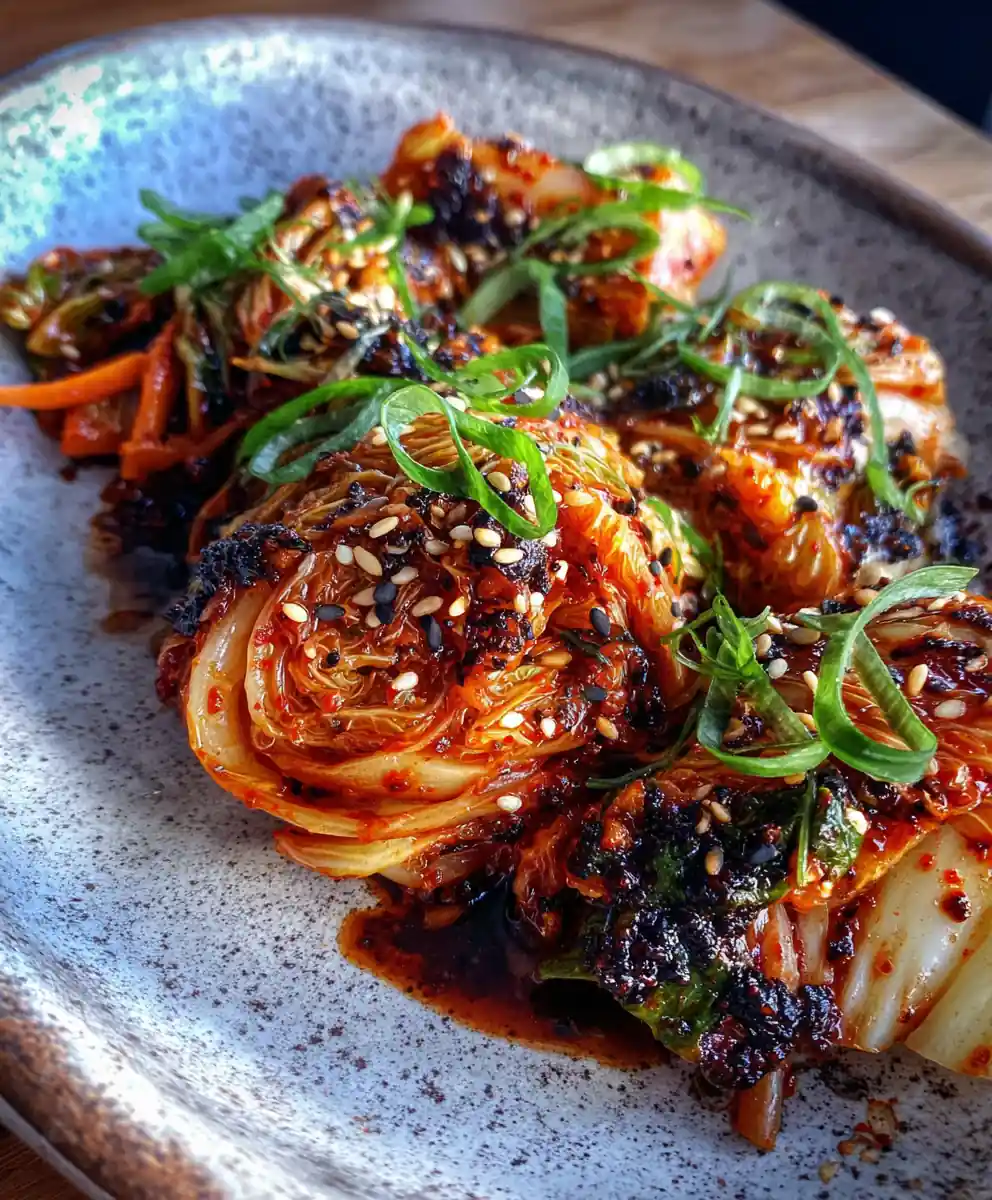
Serving Suggestions for Black Garlic Umami Kimchi
Beyond serving this as a side dish, incorporate this kimchi recipe vegan into your family meals for easy dinner ideas. Try stirring it into fried rice or serving it alongside a vegan burger patty or plant-based protein. Use it to make vegan kimchi pancakes or add it to a simple vegetable stew for a quick meal. The complex flavors make it a versatile addition to many healthy recipes.
FAQs
How long does homemade vegan kimchi last?
Once refrigerated, this vegan kimchi recipe lasts for several weeks, continuing to develop flavor as it ages slowly. For meal prep, store it in an airtight glass container in the fridge, where it will keep for up to 3 months.
Do I need to use glutinous rice flour in this recipe?
The rice porridge helps thicken the paste and provides food for the bacteria, aiding fermentation. While possible to omit, it helps create the proper consistency and flavor development and is standard for most authentic kimchi recipe vegan methods.
Why do I need to use two different pastes in this recipe?
The black garlic and miso swirl paste introduces umami depth in a specific way that prevents it from overpowering the fresh red paste. It creates a layered flavor profile, offering a pop of rich flavor that’s missing when traditional ingredients are simply removed.
Is black garlic hard to find, and can I use regular garlic instead?
Black garlic can be found online or in specialty grocery stores. You cannot substitute regular garlic in the swirl paste, as black garlic has a completely different flavor profile (sweet, mild umami, not pungent) and texture.
Is fermentation absolutely necessary for this recipe?
You can eat it immediately (Geotjeori style) for a fresh salad texture, but fermentation is key to developing the complex flavors and probiotics that define kimchi. The flavor profile changes dramatically during fermentation.
Why does my kimchi taste too salty after brining?
If the finished kimchi tastes too salty, it means you didn’t rinse enough of the initial salt from the leaves. My personal tip is to perform a taste test on a small piece of cabbage after the brining and rinsing steps to ensure the salt level is balanced before applying the paste.
How do I know when the fermentation is finished?
Taste it! The kimchi will become progressively sour over time; refrigerate once it reaches your preferred level of sourness. The fermentation time can vary based on your room’s temperature; I check mine daily after day two.
Conclusion
Making homemade kimchi recipe vegan with deep umami flavor is easier than you think, especially when you focus on this specific technique. The black garlic and miso swirl transforms this into a truly unique and delicious dish, perfect for family dinners or healthy eating goals. Try making a batch this week and experience the difference this unique umami boost makes to your family cooking. Save this vegan kimchi recipe to Pinterest for later to keep it handy for meal prep.
Print
kimchi recipe vegan
- Total Time: 170 minutes
- Yield: 10 servings
- Diet: vegan
Description
This vegan kimchi recipe replaces fish sauce with a black garlic and miso umami swirl to achieve deep, complex flavor. The fermentation process delivers traditional spicy and sour notes without sacrificing authenticity.
Ingredients
- Cabbage Brining: 4.4 lbs napa cabbage; 1/2 cup coarse sea salt
- Fresh Vegetables: 7 oz daikon radish, julienned; 3.5 oz carrots, julienned; 6-8 green onions, cut into 2-inch pieces
- Main Kimchi Paste Base: 1/2 cup gochugaru (Korean chili flakes); 8 cloves garlic, minced; 1.5 inch fresh ginger, grated; 1/4 cup glutinous rice flour; 1/2 cup kombu dashi, cooled; 2 tbsp agave nectar; 1 tbsp apple cider vinegar; 1 tbsp roasted shiitake mushroom powder
- Black Garlic & Miso Umami Swirl Paste: 1 oz black garlic cloves, mashed; 2 tbsp white miso paste; 1 tbsp agave nectar; 1 tbsp tamari; 2 tsp toasted sesame oil
Optional (plan-ahead): If you’re shopping for the week, I put this into a 4-Week Meal Plan + Grocery Lists so dinner’s already decided before your day gets busy.
Instructions
- Prepare Cabbage: Cut the napa cabbage into halves or quarters. Rub coarse sea salt generously between the leaves and let sit for 2-3 hours until pliable, turning every hour. Rinse thoroughly 2-3 times to remove excess salt, then drain for 30-60 minutes.
- Make Porridge and Dashi: Whisk 1/4 cup glutinous rice flour with 1 cup cold water in a saucepan. Cook over medium-low heat for 3-5 minutes until translucent and thick. Let cool completely. Prepare kombu dashi (soak kombu in 1 cup water, heat gently to simmer, remove kombu, let cool); measure out 1/2 cup for the recipe.
- Assemble Main Kimchi Paste: In a large bowl, combine the cooled rice porridge and 1/2 cup dashi. Whisk in the gochugaru, minced garlic, grated ginger, 2 tablespoons agave nectar, apple cider vinegar, and shiitake mushroom powder. Mix until a uniform paste forms.
- Prepare Umami Swirl Paste: In a separate small bowl, combine the mashed black garlic cloves, miso paste, 1 tablespoon agave nectar, tamari, and sesame oil. Mix until smooth.
- Combine Vegetables: Add the julienned daikon and carrots along with the green onions to the large bowl containing the main red paste. Mix until all vegetables are evenly coated.
- Apply Pastes to Cabbage: Wearing gloves, spread a thin layer of the main red paste over each leaf of the cabbage sections. Dot small amounts of the black garlic & miso swirl paste onto the leaves and spread gently to create dark streaks. Repeat for all sections.
- Ferment: Pack the coated cabbage tightly into a clean glass jar, pressing down firmly to remove air pockets and submerge in brine. Seal loosely or use an airlock and ferment at cool room temperature (65-72°F) for 2-5 days, burping daily.
- Store and Serve: Once desired sourness is reached, transfer the jar to the refrigerator. Serve chilled, optionally garnished with extra swirl paste and toasted sesame seeds.
Notes
Ensure you rinse the cabbage thoroughly after brining to avoid excessive saltiness. If the main paste consistency is too thick, add a small amount of water or dashi to thin it out.
- Prep Time: 165 minutes
- Cook Time: 5 minutes
- Category: side dish
- Method: fermentation
- Cuisine: korean
Nutrition
- Serving Size: 100 grams
- Calories: 25 kcal
- Sugar: 2 g
- Sodium: 350 mg
- Fat: 0.5 g
- Saturated Fat: 0 g
- Unsaturated Fat: 0.5 g
- Trans Fat: 0 g
- Carbohydrates: 5 g
- Fiber: 2 g
- Protein: 1 g
- Cholesterol: 0 mg
FREE PRINTABLE RECIPE
Get the Printable Recipe PDF (Free)
Enter your email and we’ll send you the ingredients + step-by-step instructions as a clean PDF you can save to your phone.
- ✅ Printable PDF (ingredients + steps)
- ✅ Save it to your phone (no long scrolling)
- ✅ Includes cook time + servings
- ✅ Easy to follow
FAQ
Where’s the full recipe?
It’s delivered as a printable PDF so you can save it and cook without scrolling.
I didn’t get the email.
Check Spam/Promotions and search your inbox for your site name. Then click Confirm to receive the PDF.