
Looking for a restaurant-quality meal you can easily create at home? This Grilled Sea Bass on Plancha with Savory Thai Sauce recipe delivers an explosion of flavor and texture. The delicate, flaky sea bass gets a beautiful sear on a hot plancha, resulting in incredibly crispy skin. Paired with a fragrant and balanced Thai sauce, this dish is a delightful combination of culinary traditions. We’ll guide you through each step to achieve perfectly grilled fish and a sauce that will have you craving more. Get ready to impress your family and friends with this stunning and surprisingly simple recipe!
Ingredients for Grilled Sea Bass with Thai Sauce
- Sea Bass Fillets (2 ≈ 180g / 6oz each): We’re using skin-on sea bass fillets, approximately 6 ounces each. Sea bass is prized for its mild, slightly sweet flavor and firm, yet flaky texture. Ensure the pin-bones have been removed for a more enjoyable eating experience.
- Extra-Virgin Olive Oil (1 tbsp / 15ml / 1 fl oz): A good quality extra-virgin olive oil is essential for brushing the fish, preventing sticking on the plancha, and contributing to a beautiful golden-brown crust.
- Kosher Salt (½ tsp / 2g / 0.1oz): Kosher salt is preferred for its larger crystals, which help to season the fish evenly and draw out moisture for a crispier skin.
- Freshly Ground Black Pepper (¼ tsp / 1g / 0.04oz): Freshly ground black pepper adds a subtle spice and depth of flavor to the sea bass.
- Coconut Milk (200ml / ⅞ cup): Full-fat canned coconut milk is the base of our Thai sauce, providing richness and creaminess. Avoid using light coconut milk, as it lacks the necessary fat content for a truly luscious sauce.
- Lime Juice (2 tbsp / 30ml / 2 fl oz): Freshly squeezed lime juice is crucial for balancing the sweetness of the palm sugar and adding a bright, citrusy note to the sauce.
- Fish Sauce (1 tbsp / 15ml / ½ fl oz): Halal-certified fish sauce provides the umami depth characteristic of Thai cuisine. It’s a salty, savory ingredient that elevates the overall flavor profile.
- Palm Sugar or Brown Sugar (1 tsp / 5g / 0.2oz): Palm sugar offers a unique caramel-like sweetness, but brown sugar is a readily available and excellent substitute. This ingredient balances the saltiness of the fish sauce and the acidity of the lime juice.
- Garlic (1 clove, minced): Freshly minced garlic adds aromatic complexity to the sauce.
- Ginger (½ in / 1cm piece, grated): Grated ginger provides a warm, spicy, and slightly citrusy flavor that complements the other ingredients beautifully.
- Red Thai Chili (1 small, thinly sliced): A thinly sliced red Thai chili introduces a pleasant heat to the sauce. Remove the seeds for a milder spice level.
- Lemongrass (1 tsp / 2g / 0.07oz, finely chopped): Finely chopped lemongrass stalk imparts a bright, citrusy, and floral aroma to the sauce.
- Kaffir Lime Leaves (2, torn): Torn kaffir lime leaves contribute a distinctive citrusy and aromatic twist to the sauce.
- Toasted Sesame Oil (½ tsp / 2ml / 0.1 fl oz): A finishing drizzle of toasted sesame oil adds a nutty aroma and a glossy sheen to the dish.
- Unsalted Roasted Peanuts (1 tbsp / 15g / 0.5oz, coarsely chopped): Coarsely chopped roasted peanuts provide a delightful crunch and nutty flavor as a garnish.
- Toasted Coconut Flakes (1 tbsp / 5g / 0.2oz): Toasted coconut flakes add another layer of texture and a subtle sweetness as a garnish.
- Fresh Cilantro Leaves (a few sprigs): Fresh cilantro leaves offer a bright, herbaceous garnish.
- Lime (1, cut into wedges): Lime wedges are served alongside the dish, allowing diners to add an extra burst of acidity to their liking.
Ingredient Substitutions
Don’t have everything on hand? Here are a few simple substitutions:
- Palm Sugar: Brown sugar, maple syrup, or honey can be used as substitutes for palm sugar.
- Fish Sauce: If you’re avoiding fish sauce, you can use soy sauce, but it will alter the flavor profile. Start with a smaller amount and adjust to taste.
- Kaffir Lime Leaves: While difficult to perfectly replicate, a small amount of lime zest can offer a similar citrusy aroma.
- Lemongrass: If you can’t find fresh lemongrass, a teaspoon of lemongrass paste can be used.
Optional (plan-ahead): If you’re shopping for the week, I put this into a 4-Week Meal Plan + Grocery Lists so dinner’s already decided before your day gets busy.
Mastering the Plancha Technique for Sea Bass
The plancha, a flat, solid cooking surface, is the secret weapon for achieving perfectly crispy skin on your sea bass. Unlike a traditional grill with grates, a plancha provides full contact, ensuring even heat distribution and maximum skin-to-surface contact. This is crucial for rendering the fat and creating that desirable, shatteringly crisp texture. A cast-iron griddle works beautifully if you don’t have a dedicated plancha.
Step-by-Step Instructions for Grilled Sea Bass Perfection
- Prepare the Sea Bass: Begin by thoroughly patting the sea bass fillets dry with paper towels. This is a non-negotiable step! Excess moisture will steam the fish instead of allowing it to sear and crisp. Lightly score the skin in a crosshatch pattern. These shallow cuts prevent the skin from curling up during cooking and help it render evenly.
- Season Generously: Season both sides of the fillets with kosher salt and freshly ground black pepper. Don’t be shy with the seasoning – sea bass can handle it. The salt not only flavors the fish but also helps draw out moisture, further contributing to crispy skin. Let the seasoned fillets rest while you prepare the sauce.
- Craft the Savory Thai Sauce: In a small saucepan, combine the coconut milk, lime juice, fish sauce, palm sugar (or brown sugar), minced garlic, grated ginger, sliced chili, chopped lemongrass, and torn kaffir lime leaves. Bring the mixture to a gentle simmer over medium heat, stirring occasionally. Reduce the heat to low and allow the sauce to thicken slightly for 4-5 minutes. The sauce should coat the back of a spoon. Taste and adjust seasoning as needed – more lime juice for acidity, fish sauce for umami, or sugar for sweetness.
- Toast the Garnishes: While the sauce simmers, toast the peanuts and coconut flakes in a dry skillet over medium heat for 2-3 minutes, or until golden brown and fragrant. Watch them carefully, as they can burn quickly. Transfer the toasted garnishes to a small bowl.
- Heat the Plancha: Heat your plancha or cast-iron griddle to medium-high heat, around 200°C (392°F). A shimmering surface indicates it’s ready. Lightly brush the surface with olive oil to prevent sticking.
- Sear the Skin: Place the sea bass fillets skin-side down on the hot plancha. Immediately press gently with a spatula for the first 30 seconds to ensure even contact. This is vital for achieving maximum crispness. Cook for 3-4 minutes without moving the fillets. Resist the urge to peek!
- Finish Cooking the Flesh: Once the skin is beautifully crisp and releases easily from the plancha, carefully flip the fillets. Cook the flesh side for an additional 2-3 minutes, or until the thickest part reaches an internal temperature of 62°C (144°F) and the flesh is opaque.
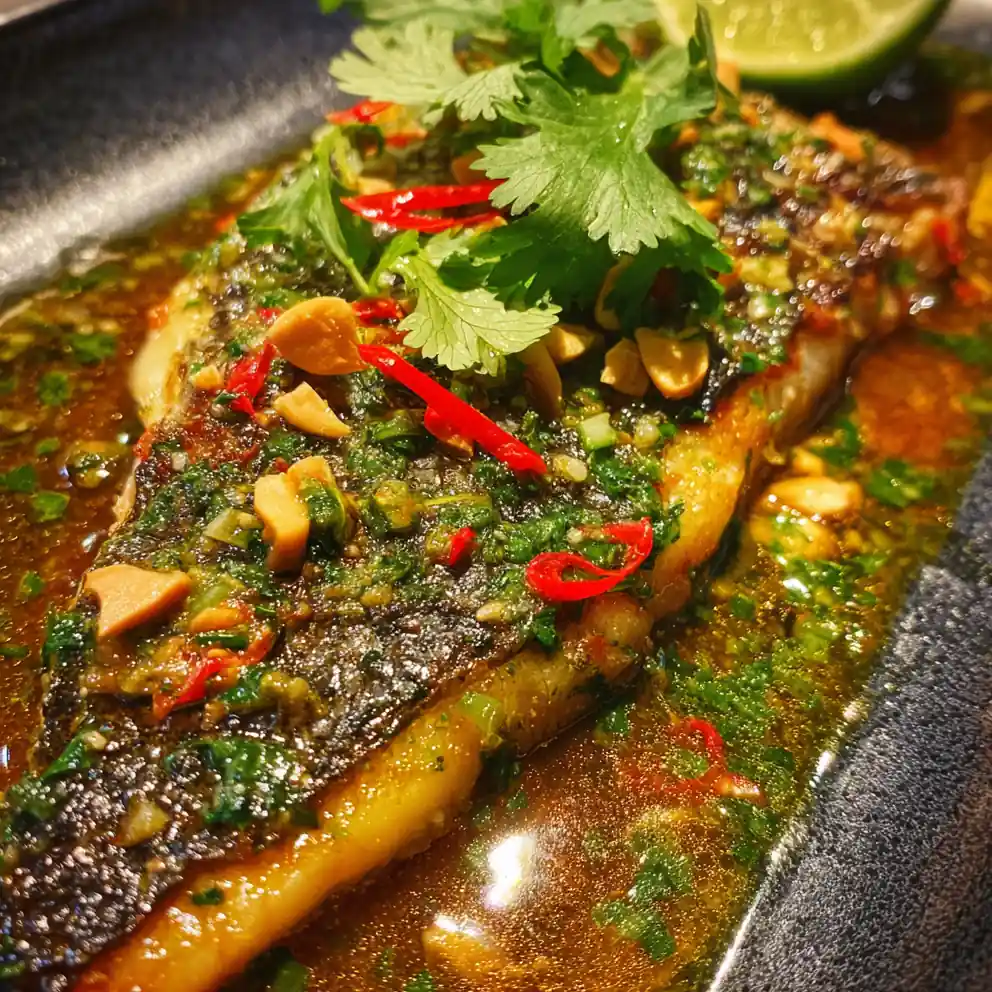
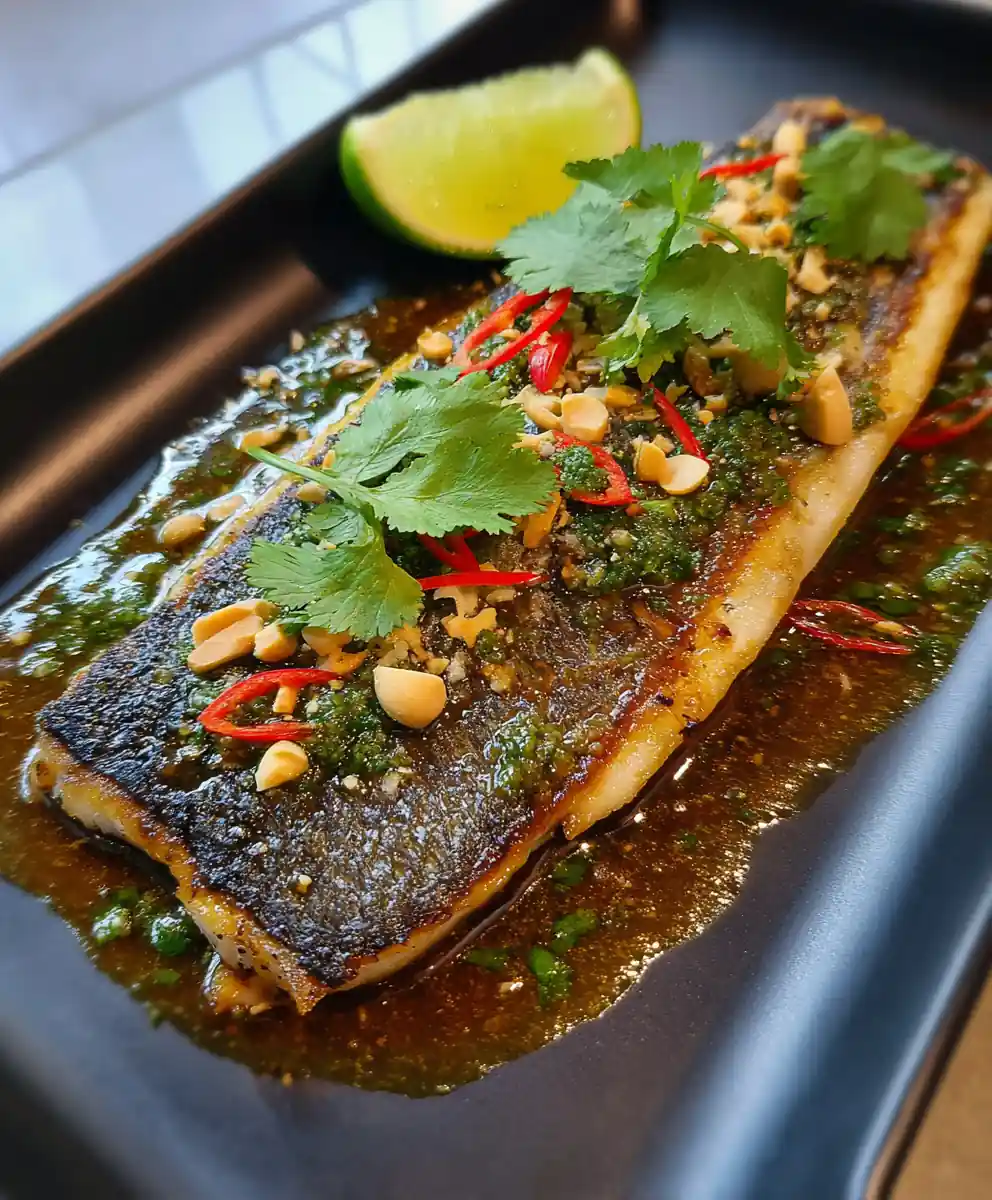
- Rest and Plate: Remove the fish from the heat and let it rest on a warm plate for 2 minutes. This allows the juices to redistribute, resulting in a more tender and flavorful fillet. Plate each fillet skin-side up on a matte black rectangular plate.
- Sauce and Garnish: Spoon a generous swoosh of the warm Thai sauce over the top of each fillet. Drizzle ½ tsp of toasted sesame oil around the edge for a glossy finish. Scatter the chopped peanuts, toasted coconut flakes, fresh cilantro leaves, and thin chili ribbons around the fish. Place a lime wedge diagonally opposite the fillet for a pop of color.
- Serve Immediately: Serve immediately, encouraging diners to squeeze fresh lime juice over the sauce for an extra burst of acidity.
The Science Behind the Thai Sauce
This Thai sauce isn’t just about flavor; it’s a carefully balanced combination of ingredients that work synergistically. The coconut milk provides richness and body, while the lime juice offers a bright acidity that cuts through the fat. Fish sauce delivers a savory umami depth, and palm sugar (or brown sugar) balances the flavors with a touch of sweetness. The aromatics – garlic, ginger, chili, lemongrass, and kaffir lime leaves – create a complex and fragrant profile that complements the delicate flavor of the sea bass.
Why Skin-On Fillets are Essential
Using skin-on sea bass fillets is non-negotiable for this recipe. The skin not only provides a delightful textural contrast but also acts as a protective layer, keeping the fish moist during cooking. When properly seared on the plancha, the skin transforms into a crispy, golden-brown delight that elevates the entire dish. Removing the pin bones before cooking ensures a pleasant dining experience.
Pairing Suggestions for Your Grilled Sea Bass
This Grilled Sea Bass with Savory Thai Sauce pairs beautifully with fragrant jasmine rice to soak up the delicious sauce. A side of stir-fried bok choy or green beans adds a fresh, vibrant element to the meal. For a beverage pairing, consider a crisp Sauvignon Blanc or a light-bodied Riesling to complement the Thai flavors.
Frequently Asked Questions
Can I use another type of fish?
While sea bass is ideal, you can substitute with other firm-fleshed white fish like snapper, grouper, or halibut. Adjust cooking times accordingly.
What if I don’t have a plancha?
A heavy-bottomed cast-iron skillet works as a great substitute. Ensure it’s well-seasoned to prevent sticking.
Can I adjust the spice level?
Absolutely! Reduce or omit the chili if you prefer a milder flavor. You can also remove the seeds from the chili to lessen the heat.
Enjoy this exquisite Grilled Sea Bass on Plancha with Savory Thai Sauce! If you loved this recipe, be sure to save it to your Pinterest board for later. Pin it here!
Print
Grilled Sea Bass On Plancha With Savory Thai Sauce
- Total Time: 35 minutes
- Yield: 2 servings
- Diet: Pescatarian
Description
This recipe delivers a restaurant-quality Grilled Sea Bass with a flavorful Savory Thai Sauce. The sea bass achieves crispy skin on a plancha, complemented by a fragrant and balanced sauce.
Ingredients
- Sea Bass Fillets (360g / 12oz, skin-on): Pat dry and score the skin.
- Extra-Virgin Olive Oil (1 tbsp / 15ml): For brushing the fish.
- Kosher Salt (½ tsp / 2g): For seasoning.
- Black Pepper (¼ tsp / 1g): Freshly ground.
- Coconut Milk (200ml / ⅞ cup): Full-fat canned.
- Lime Juice (2 tbsp / 30ml): Freshly squeezed.
- Fish Sauce (1 tbsp / 15ml): Halal-certified.
- Palm Sugar (1 tsp / 5g): Or brown sugar.
- Garlic (1 clove, minced): Freshly minced.
- Ginger (½ in / 1cm, grated): Freshly grated.
- Red Thai Chili (1 small, sliced): Adjust to taste.
- Lemongrass (1 tsp / 2g, chopped): Finely chopped.
- Kaffir Lime Leaves (2, torn): Torn.
- Sesame Oil (½ tsp / 2ml): Toasted.
- Roasted Peanuts (1 tbsp / 15g, chopped): Coarsely chopped.
- Coconut Flakes (1 tbsp / 5g): Toasted.
- Cilantro (a few sprigs): Fresh leaves.
- Lime (1, wedges): For serving.
Optional (plan-ahead): If you’re shopping for the week, I put this into a 4-Week Meal Plan + Grocery Lists so dinner’s already decided before your day gets busy.
Instructions
- Prepare Fish: Pat sea bass dry, score skin, and season with salt and pepper.
- Make Sauce: Simmer coconut milk, lime juice, fish sauce, sugar, garlic, ginger, chili, lemongrass, and kaffir lime leaves until slightly thickened.
- Toast Garnishes: Toast peanuts and coconut flakes until golden brown.
- Heat Plancha: Heat plancha to medium-high (200°C / 392°F) and brush with oil.
- Sear Skin: Sear skin-side down for 3-4 minutes, pressing gently.
- Finish Cooking: Flip and cook flesh side for 2-3 minutes, until cooked through.
- Rest & Plate: Rest for 2 minutes, then plate skin-side up.
- Sauce & Garnish: Spoon sauce over fish, drizzle with sesame oil, and garnish.
Notes
Using skin-on fillets is crucial for crispy skin and keeping the fish moist. A cast-iron skillet can substitute for a plancha.
- Prep Time: 20 minutes
- Cook Time: 15 minutes
- Category: Seafood
- Method: Grilling
- Cuisine: Thai
Nutrition
- Serving Size: 2
- Calories: 450 kcal
- Sugar: 15 g
- Sodium: 600 mg
- Fat: 30 g
- Saturated Fat: 15 g
- Unsaturated Fat: 10 g
- Trans Fat: 0 g
- Carbohydrates: 20 g
- Fiber: 3 g
- Protein: 30 g
- Cholesterol: 70 mg