
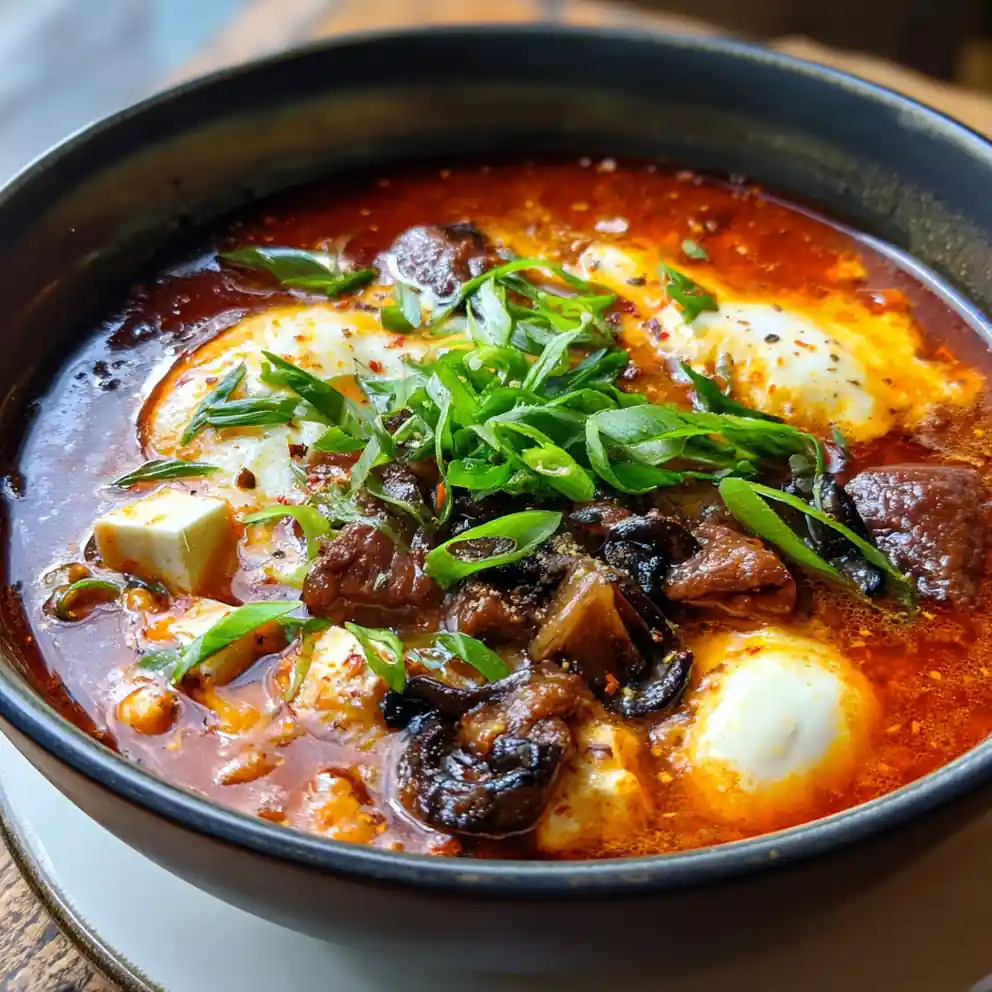
I really believe a good bowl of soup can fix almost anything, especially on a cold night. This hearty kimchi soup recipe is my go-to when I need a big, warm hug in a bowl. It’s savory and perfectly spiced, with an unexpected twist: a generous topping of melted mozzarella cheese. The combination of spicy kimchi and rich, stretchy cheese creates a new level of comfort food that’s easy enough for a weeknight and guaranteed to please everyone at the table. This unique kimchi soup recipe offers a delicious way to use up aged kimchi and transform a simple soup into a memorable meal, ready in under an hour. The melted cheese adds a creamy texture and cuts through the spice, making this specific version of kimchi soup approachable for the whole family.
Ingredients
- 1 tablespoon (15 ml) sesame oil: A key aromatic oil that adds a deep, nutty flavor to the base of the soup. Use toasted sesame oil for maximum aroma, not regular cooking sesame oil. A small amount goes a long way in defining the flavor profile.
- 340 g (12 oz) beef chuck, thinly sliced or cut into small cubes: Chuck is ideal for stewing as it becomes tender during the simmer time. Thinly slicing ensures quick cooking and tender texture.
- 1 medium (150 g) yellow onion, minced: The base aromatic for building sweetness in the soup. Mincing helps the onion dissolve into the broth as it cooks. Sautéing until softened creates a deep, caramelized flavor.
- 4 cloves (20 g) garlic, minced: A classic pungent aromatic essential to Korean cooking. Do not let the garlic brown or burn; only cook until fragrant. Use fresh garlic for best flavor; avoid pre-minced jarred garlic if possible.
- 1 tablespoon (15 g) fresh ginger, grated: Adds a sharp, bright undertone that balances the richness of the beef and cheese. Freshly grated ginger provides a more vibrant flavor than powdered ginger. Make sure to peel the skin before grating.
- 2 cups (500 g) aged kimchi, roughly chopped, with 2 tablespoons (30 ml) juice reserved: Aged kimchi provides a deeper, sour flavor, which is crucial for authentic taste in a kimchi soup recipe. The reserved juice adds extra tang and depth to the broth. Chop into roughly 1-inch pieces; do not over-chop or blend.
- 2 tablespoons (15 g) gochugaru (Korean chili flakes): Provides heat and a vibrant red color to the soup. Use standard-grade gochugaru for a moderate spice level. Adjust amount to your preference; reduce for less heat or increase for more spice.
- 2 tablespoons (30 g) gochujang (Korean chili paste): Adds a complex, fermented sweetness and thickness to the broth. This paste balances the sourness of the kimchi with a rich umami flavor. Ensure the gochujang is fresh and not dried out.
- 2 tablespoons (30 ml) soy sauce: Used for salinity and extra umami depth in the broth. We recommend low-sodium soy sauce to control the final salt level. Taste before adding extra salt, as kimchi and broth add natural salinity.
- 6 cups (1.4 L) beef broth or vegetable broth: The primary liquid base for the soup. Beef broth provides the richest, most savory flavor to complement the beef chuck. Vegetable broth is a suitable alternative for a lighter flavor profile.
- 150 g (5 oz) fresh shiitake mushrooms, sliced: Adds an earthy, meaty texture that complements the beef and tofu. Clean the mushrooms thoroughly before slicing; remove tough stems. Substitute with cremini or oyster mushrooms if shiitake are unavailable.
- 1 block (396 g / 14 oz) firm tofu, drained and cut into 2.5 cm (1 inch) cubes: Adds protein and a soft, delicate texture contrast to the soup. Firm tofu holds its shape better during simmering than softer varieties. Drain well to prevent watering down the broth.
- 1.5 cups (170 g) shredded mozzarella cheese: The key ingredient for creating the savory, melty topping. Use full-fat, low-moisture mozzarella for the best melt and stretch. Avoid pre-shredded cheese if possible; freshly shredded melts more smoothly without anti-caking agents.
- 3-4 stalks (30 g) scallions, thinly sliced, for garnish: Adds a fresh, bright onion flavor and a pop of green color. Slice thinly on a bias for a professional presentation. Add just before serving over the melted cheese.
Optional (plan-ahead): If you’re shopping for the week, I put this into a 4-Week Meal Plan + Grocery Lists so dinner’s already decided before your day gets busy.
Instructions
- Brown the Beef Chuck: Heat the sesame oil in a large pot or Dutch oven over medium-high heat. Add the thinly sliced beef chuck and cook for 5-7 minutes, until well-browned on all sides. Remove the browned beef from the pot using a slotted spoon and set aside, leaving any rendered fat behind.
- Sauté Aromatics: Add the minced yellow onion to the pot with the remaining fat and sauté over medium heat until softened, about 3-4 minutes. Stir in the minced garlic and grated ginger, cooking for another minute until fragrant. Be careful not to let the garlic burn, as this will turn the soup bitter.
- Build the Flavor Base: Return the browned beef to the pot. Add the roughly chopped kimchi and the reserved kimchi juice. Stir in the gochugaru, gochujang, and soy sauce. Cook, stirring frequently, for 5 minutes, allowing the flavors to meld together and the kimchi to soften slightly. Giving the kimchi five minutes to sauté with the aromatics really deepens the flavor of the final kimchi soup recipe, rather than just adding it all at once.
- Simmer the Soup: Pour in the 6 cups of beef broth. Bring the mixture to a full boil over high heat, then reduce the heat to low. Cover the pot and allow the soup to simmer for 20 minutes to tenderize the beef chuck and deepen the flavors. The goal here is a gentle simmer, not a rolling boil.
- Add Tofu and Mushrooms: Add the sliced shiitake mushrooms and the cubed firm tofu to the simmering soup. Continue to simmer for another 10-15 minutes, or until the mushrooms are tender and the tofu is heated completely through. Taste the soup and adjust seasonings as needed, adding more soy sauce for saltiness or gochugaru for extra spice if desired, creating the perfect balance for this high-protein kimchi soup recipe.
- Top with Mozzarella and Serve: Ladle the hot kimchi soup immediately into individual serving bowls. Generously top each bowl with the shredded mozzarella cheese. The residual heat of the soup will quickly melt the cheese into gooey, stretchy pockets.
- Optional Broiling Step: For an extra-special, bubbly, and browned top, carefully place the heatproof serving bowls under a broiler for 1-2 minutes. Watch carefully to prevent burning; the cheese can go from perfect to charred in seconds. If you notice your cheese isn’t melting properly, ensure your soup is piping hot when you add it, or give it an extra 30 seconds under the broiler to get it gooey. Garnish generously with thinly sliced scallions over the melted cheese and serve hot.
The Secret to the Savory Cheese Topping
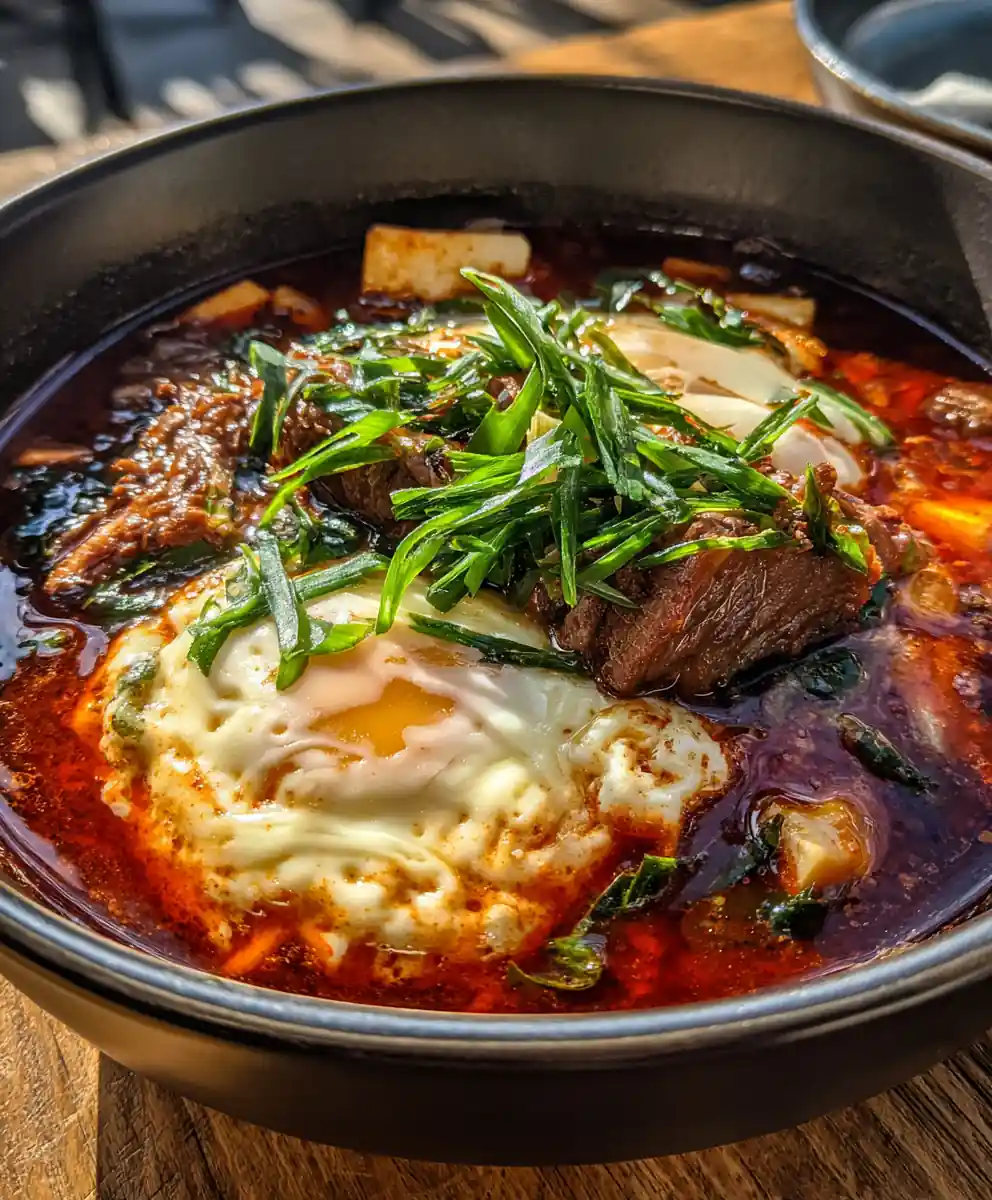
This unique addition of cheese transforms the soup from a traditional spicy jjigae into a hearty fusion meal. The mozzarella cheese melts into stretchy strings and gooey pockets, providing a creamy, savory counterpoint to the sour and spicy kimchi base. For the best results, use freshly shredded, full-fat mozzarella. Pre-shredded varieties often contain anti-caking agents that hinder a smooth melt. This topping is a fantastic way to introduce new flavors and textures to family members who might find traditional kimchi soup too intense on its own. If you don’t have a broiler, simply add the mozzarella right after ladling the soup; the heat will melt it quickly. For a truly professional look, you can also use a kitchen torch to brown the top before serving.
Customizing Your Kimchi Soup: Variations and Swaps
- Protein Swaps: The beef chuck can be replaced with boneless, skinless chicken thigh for a lighter flavor profile.
- Vegetable Additions: Feel free to bulk up this family dinner with other hearty vegetables. Add sliced zucchini during the last 10 minutes of simmering, or include spinach or bok choy in the last 2 minutes.
- Spice Control: If you prefer less heat, reduce the gochugaru (chili flakes) to 1 tablespoon or omit it entirely. You can also use less gochujang, which provides less direct spice and more deep flavor.
- Noodle Boost: For an even heartier meal, add fresh ramen noodles during the last 5 minutes of simmering. The noodles absorb the rich broth and create a full meal.
Making Ahead and Storing Leftovers
This kimchi soup recipe is excellent for meal prep. The flavors develop even further overnight in the refrigerator. Store the soup base separately from the cheese topping for best results. Reheat gently on the stovetop. The soup base (without the tofu and mozzarella) freezes well for up to 3 months. Freeze in airtight containers. Thaw overnight in the refrigerator and reheat on the stovetop. Add fresh tofu and mozzarella after reheating. Tofu can break down slightly during freezing and reheating. For the best texture, add fresh tofu when reheating leftovers or add it during the final cooking stage if serving the soup fresh.
FAQs
What is the difference between gochugaru and gochujang?
Gochugaru (chili flakes) provides pure heat and color. Gochujang (chili paste) provides sweetness, complex fermented flavor, and thickness. Using both builds layers of flavor in this kimchi soup recipe.
Can I use new/fresh kimchi for this recipe?
For a truly authentic flavor profile, it’s best to use aged (sour) kimchi. Fresh kimchi lacks the deep fermented tang that defines a great kimchi soup recipe.
Is this soup very spicy?
The spice level is moderate, but easily customizable. The mozzarella cheese topping helps to cut through the spice, making it more balanced and family-friendly.
What can I use instead of beef broth?
You can substitute beef broth with chicken broth for a slightly lighter flavor or vegetable broth for a vegetarian option (omit the beef chuck).
What side dishes go well with this soup?
Serve this hearty soup with a bowl of warm, steamed white rice and simple side dishes like cucumber salad (oi muchim) or pickled radish.
Can I make this kimchi soup gluten-free?
Yes, to make this kimchi soup recipe gluten-free, substitute the soy sauce with tamari. Ensure you are using a certified gluten-free gochujang as well. I find that I can swap tamari 1:1 for soy sauce without changing the overall flavor too much.
How long does this kimchi soup keep in the fridge?
This high-protein kimchi soup recipe keeps for 3-4 days in an airtight container in the refrigerator. To reheat, warm it gently on the stovetop, then add fresh cheese just before serving for the best texture.
Conclusion
This cheese-topped kimchi soup recipe is more than just a quick meal; it’s a new family favorite that combines classic flavors with a fun, modern twist. The savory beef and spicy kimchi broth pair perfectly with the gooey mozzarella topping. Save this easy kimchi soup recipe to your favorite Pinterest board for later and share this comfort food with your family this week.
Print
kimchi soup recipe
- Total Time: 60 minutes
- Yield: 4 servings 1x
- Diet: General
Description
This hearty kimchi soup is a comforting meal featuring savory beef chuck, aged kimchi, and a spicy broth. Topped with a generous layer of melted mozzarella cheese, this fusion recipe offers a unique, family-friendly twist on a classic Korean dish.
Ingredients
- 1 tbsp sesame oil
- 340 g (12 oz) thinly sliced beef chuck
- 1 medium yellow onion, minced
- 4 cloves garlic, minced
- 1 tbsp fresh ginger, grated
- 2 cups (500 g) aged kimchi, roughly chopped, plus 2 tbsp juice reserved
- 2 tbsp gochugaru (Korean chili flakes)
- 2 tbsp gochujang (Korean chili paste)
- 2 tbsp soy sauce
- 6 cups (1.4 L) beef broth
- 150 g (5 oz) shiitake mushrooms, sliced
- 1 block (396 g / 14 oz) firm tofu, cubed
- 1.5 cups (170 g) shredded mozzarella cheese
- 3–4 scallions, thinly sliced, for garnish
Optional (plan-ahead): If you’re shopping for the week, I put this into a 4-Week Meal Plan + Grocery Lists so dinner’s already decided before your day gets busy.
Instructions
- Brown the Beef Chuck: Heat sesame oil in a large pot over medium-high heat. Add beef chuck slices and cook for 5-7 minutes until browned. Remove the beef and set aside.
- Sauté Aromatics: Add minced onion to the pot and sauté for 3-4 minutes until softened. Stir in minced garlic and grated ginger, cooking for 1 minute until fragrant.
- Build the Flavor Base: Return the browned beef to the pot. Add chopped kimchi, kimchi juice, gochugaru, gochujang, and soy sauce. Cook for 5 minutes, stirring frequently.
- Simmer the Soup: Pour in beef broth. Bring to a boil, then reduce heat to low. Cover and simmer for 20 minutes to tenderize the beef.
- Add Tofu and Mushrooms: Add sliced shiitake mushrooms and cubed tofu to the soup. Continue to simmer for another 10-15 minutes until mushrooms are tender and tofu is heated through. Taste and adjust seasonings if necessary.
- Serve with Cheese Topping: Ladle hot soup into individual bowls. Top each bowl generously with shredded mozzarella cheese. Garnish with scallions and serve immediately. Optionally, broil for 1-2 minutes for a bubbly top.
Notes
Use aged (sour) kimchi for authentic flavor. For a smooth melt, use full-fat, low-moisture mozzarella, freshly shredded if possible. To make this recipe gluten-free, substitute tamari for soy sauce and ensure the gochujang is certified gluten-free. The soup base can be made ahead; add fresh tofu and cheese when reheating.
- Prep Time: 20 minutes
- Cook Time: 40 minutes
- Category: Main Dish, Soup
- Method: Stove Top, Simmer
- Cuisine: Korean
Nutrition
- Serving Size: 1 serving
- Calories: 450 kcal
- Sugar: 5 g
- Sodium: 1100 mg
- Fat: 23 g
- Saturated Fat: 12 g
- Unsaturated Fat: 10 g
- Trans Fat: 0 g
- Carbohydrates: 18 g
- Fiber: 3 g
- Protein: 32 g
- Cholesterol: 80 mg
FREE PRINTABLE RECIPE
Get the Printable Recipe PDF (Free)
Enter your email and we’ll send you the ingredients + step-by-step instructions as a clean PDF you can save to your phone.
- ✅ Printable PDF (ingredients + steps)
- ✅ Save it to your phone (no long scrolling)
- ✅ Includes cook time + servings
- ✅ Easy to follow
FAQ
Where’s the full recipe?
It’s delivered as a printable PDF so you can save it and cook without scrolling.
I didn’t get the email.
Check Spam/Promotions and search your inbox for your site name. Then click Confirm to receive the PDF.