
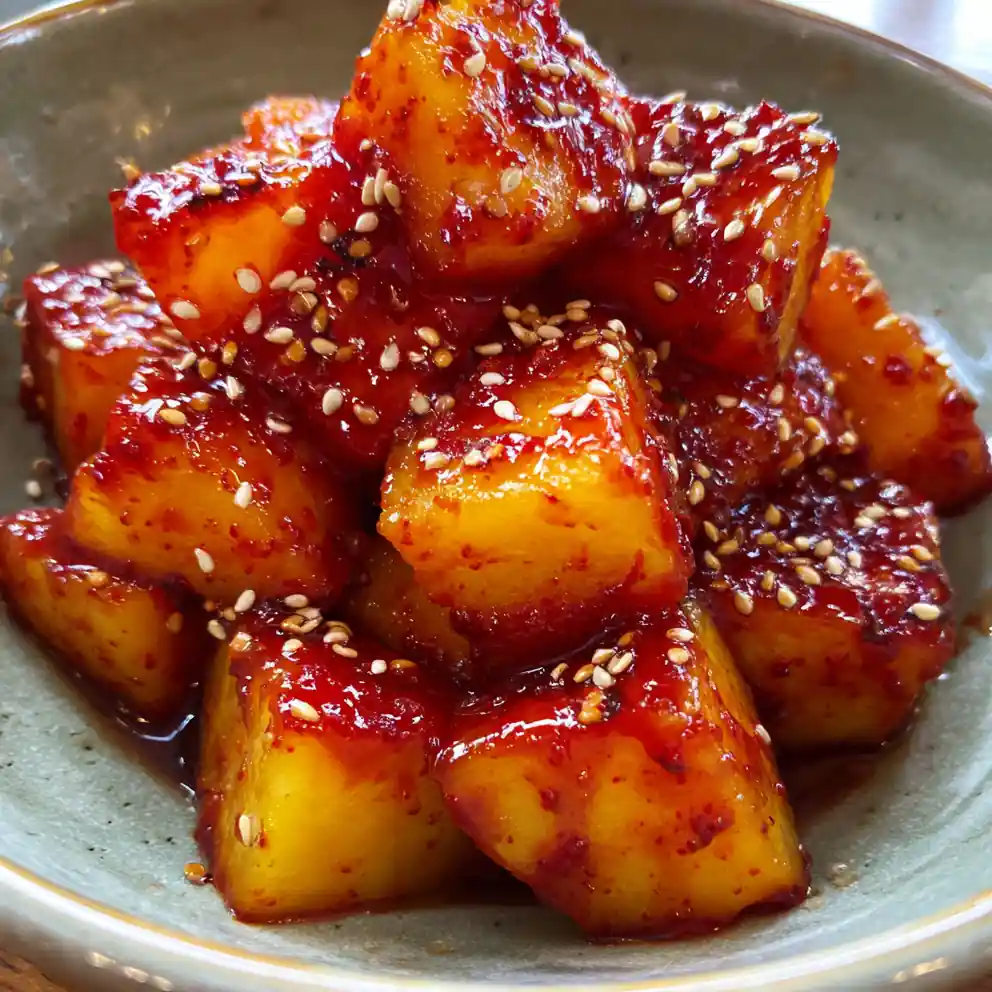
I think every home cook needs a few pantry staples that make weeknight meals special. This crunchy, vibrant korean pickled radish recipe is exactly that, offering a sweet, sour, and perfectly crunchy side dish that pairs well with almost anything. Unlike a typical plain pickled radish, this recipe features a show-stopping spicy gochujang glaze that adds a savory kick and beautiful color to every bite. It’s incredibly easy to make ahead for meal prep. I keep a batch in my fridge to elevate simple rice bowls and quick family dinners. This guide shows you how to prepare the radish, make the easy hot brine, and create that irresistible spicy glaze for a truly unique flavor experience.
Ingredients
- 500 g (1 large) Korean Radish or Daikon Radish: This is the base of your pickle, providing that satisfying crunch and slight peppery flavor. Choose a firm, heavy radish without soft spots or discoloration. Peel the radish before cutting into uniform 1-inch (2.5 cm) cubes for even pickling.
- 250 ml (1 cup) Water: Used as the liquid base for the pickling brine to ensure proper volume.
- 250 ml (1 cup) White Vinegar: Provides the necessary acidity for preservation and the characteristic tang of the pickle. White vinegar offers a clean, neutral flavor profile that lets the radish shine.
- 100 g (½ cup) Granulated Sugar: Balances the acidity of the vinegar and adds sweetness to the pickle. The sugar helps create a glossy texture in the brine and aids in preservation.
- 15 g (1 tbsp) Fine Sea Salt: Extracts water from the radish to help achieve a super crunchy texture. Fine sea salt dissolves quickly and evenly in the brine for consistent seasoning.
- 2.5 g (½ tsp) Ground Turmeric: This ingredient provides the beautiful bright yellow color characteristic of korean pickled radish recipe. It also adds a subtle earthy note to the flavor profile.
- 60 g (4 tbsp) Gochujang (Korean Chili Paste): The primary ingredient for the spicy glaze, delivering savory heat and fermented depth. Choose a high-quality gochujang; adjust quantity slightly for desired spice level.
- 30 ml (2 tbsp) Rice Syrup (or Light Corn Syrup): Adds sweetness, body, and a beautiful, glossy sheen to the final glaze. (Honey or maple syrup can be substituted in a pinch, but rice syrup provides the most authentic texture.)
- 15 ml (1 tbsp) Soy Sauce: Contributes umami and salty depth to balance the sweetness and heat of the gochujang. Low-sodium soy sauce works well if you are managing salt intake.
- 5 ml (1 tsp) Toasted Sesame Oil: Adds a deep, nutty aroma that is essential to most Korean side dishes. Be sure to use toasted sesame oil for maximum flavor, not plain sesame oil.
- 5 g (1 clove) Garlic, minced: Provides aromatic depth and a savory kick to the glaze. Use fresh garlic and mince finely; garlic powder is not recommended here.
- 10 ml (2 tsp) Rice Vinegar: Adds a touch of mild, sweet acidity to brighten up the heavy gochujang glaze. Do not substitute with strong white vinegar in this component.
- 15 ml (1 tbsp) Water: Used to thin the gochujang glaze slightly to achieve a coatable consistency. Add gradually to reach your desired texture.
- 5 g (1 tsp) Toasted Sesame Seeds, for garnish: Adds visual appeal and a final toasted crunch to the finished dish.
Optional (plan-ahead): If you’re shopping for the week, I put this into a 4-Week Meal Plan + Grocery Lists so dinner’s already decided before your day gets busy.
Instructions
- Prepare the Radish for Pickling: Start by peeling the large Korean radish or daikon. Cut the peeled radish into uniform 1-inch (2.5 cm) cubes. Place the radish cubes into a clean, heat-proof glass jar, leaving a bit of space at the top for the liquid.
- Make the Hot Pickling Brine: In a medium saucepan, combine the 1 cup water, 1 cup white vinegar, ½ cup granulated sugar, 1 tablespoon fine sea salt, and ½ teaspoon ground turmeric. Bring the mixture to a boil over medium-high heat, stirring constantly until the sugar and salt have fully dissolved. Remove the brine from the heat immediately after it comes to a boil.
- Pickle the Radish: Carefully pour the hot brine over the radish cubes in the glass jar, ensuring that all pieces are submerged. If the radish floats, place a small plate or a pickling weight on top to keep it under the liquid. Allow the jar to cool completely at room temperature (this takes about 1 hour), then seal it and refrigerate for at least 24 hours (or up to 1 week) before serving. The radish will develop a bright yellow color and a super crunchy texture. If the radish turns out soft, ensure you used fresh, firm radish and follow the cooling step precisely; sealing hot radish will cook it and ruin the crunch.
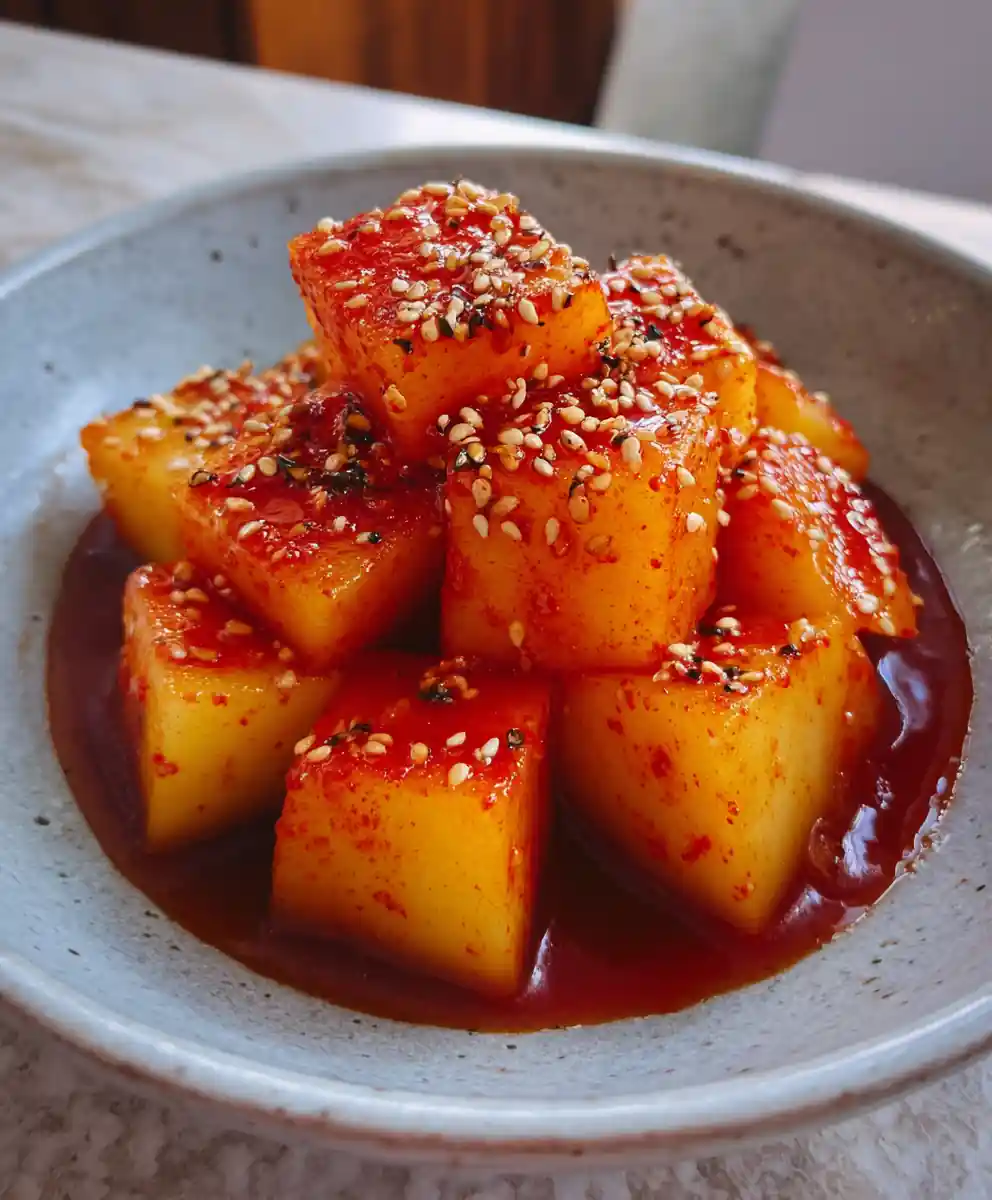
- Prepare the Spicy Gochujang Glaze (Just before serving): In a separate small bowl, combine the 4 tablespoons gochujang, 2 tablespoons rice syrup, 1 tablespoon soy sauce, 1 teaspoon toasted sesame oil, 1 clove minced garlic, 2 teaspoons rice vinegar, and 1 tablespoon water. Whisk thoroughly until all ingredients are combined, resulting in a smooth, glossy red-orange glaze. The glaze should be thick enough to cling to a spoon without being overly runny for this delicious korean pickled radish recipe.
- Plate and Serve: When ready to serve, drain the desired portion of pickled radish cubes from the brine. Arrange the bright yellow radish cubes neatly in a clean bowl or on a serving plate. Drizzle generously with the prepared spicy gochujang glaze, ensuring the cubes are well coated, and finish with a sprinkle of toasted sesame seeds for this stunning korean pickled radish recipe.
How to Store Homemade Pickled Radish and Glaze
The pickled radish, kept submerged in its brine in a sealed jar, stays crunchy and delicious in the fridge for up to three weeks. Over time, the texture softens a little, but the flavor deepens beautifully, making this a great make-ahead meal prep recipe. For the gochujang glaze, make it ahead and store it separately for up to 3 days in a small container in the fridge. Whisk it well before use if it separates. Note that freezing is not recommended for this homemade korean pickled radish recipe, as the texture changes completely upon thawing; it becomes mushy.
What to Serve with Korean Pickled Radish
This vibrant side dish adds a much-needed contrast to rich or heavy main courses. It works for a simple weeknight meal or a full family-style feast. The best part about this easy korean pickled radish recipe is how versatile it is. Here are some of our family’s favorite pairings:
- Rice dishes: Pair this spicy korean pickled radish recipe with simple rice bowls, fried rice, or bibimbap to add crunch and a spicy contrast.
- Grilled meats: Serve it alongside Korean barbecue (bulgogi, galbi), grilled chicken thighs, or grilled short ribs for a refreshing palate cleanser.
- Sandwiches and burgers: Use a few cubes to top a burger or hot dog for an unexpected, tangy, and crunchy kick.
- Noodles: It makes a great side dish for cold noodle dishes like naengmyeon or spicy ramyeon.
Customizing Your Pickled Radish Flavor
This recipe is easy to tweak to fit your family’s preferences. When I make this for my kids, I often reduce the gochujang by half for a milder flavor; the tang and crunch still work perfectly with dinner.
- Adjusting sweetness and tang: If you prefer a less sweet pickle, reduce the sugar by up to 2 tablespoons when making the brine. If you like more tang, add an additional tablespoon of white vinegar.
- Adjusting spice level: The gochujang glaze offers flexibility in heat. For a milder version, start with 2 tablespoons of gochujang instead of 4 and add more to taste. For extra heat, add a pinch of gochugaru (Korean chili flakes) to the glaze.
- Adding aromatics: For a different flavor profile, you can add thin slices of fresh ginger or a few garlic cloves to the brine while it’s heating. Remove them before pouring over the radish.
FAQs
Can I use daikon instead of Korean radish for this recipe?
Yes, daikon radish (Japanese white radish) is an excellent substitute for Korean radish (mu). Both have a similar texture, though Korean radish is slightly rounder and has a less intense peppery flavor.
How long does the pickled radish need to ferment before eating?
For optimal flavor and crunch, allow the radish to pickle in the refrigerator for at least 24 hours. The flavor improves significantly after 2-3 days, making it ideal for meal prep.
Why did my pickled radish turn out soft instead of crunchy?
Soft radish usually results from using stale or old radish, or not allowing the hot brine to cool completely before sealing. Ensure you use fresh, firm radish and follow the cooling step precisely. I also find that draining the radish after pickling and just before glazing helps retain the crunchiness.
What is rice syrup, and what if I can’t find it?
Rice syrup is a thick sweetener used often in Korean cooking, known for its mild flavor and high sheen. You can substitute light corn syrup or honey, though honey may slightly alter the flavor profile.
Do I need to use turmeric?
While turmeric adds the classic bright yellow color, it can be omitted if you prefer a natural-looking pickle. It won’t significantly impact the core flavor profile.
How long can I keep the pickled radish?
When stored in a sealed jar in the refrigerator, this homemade pickled radish recipe stays fresh for up to 3 weeks. Always check for off-smells or mold before consuming.
Conclusion
This easy korean pickled radish recipe offers the perfect balance of sweet, tangy, and crunchy, elevated by a simple spicy gochujang glaze. Save this recipe to your Pinterest board for quick access to easy, healthy family meals throughout the week.
Print
korean pickled radish recipe
- Total Time: 20 minutes
- Yield: 4 servings 1x
- Diet: Vegetarian
Description
This recipe creates crunchy, vibrant Korean pickled radishes with a sweet and sour flavor, enhanced by a spicy gochujang glaze. It’s an easy make-ahead side dish perfect for pairing with various meals.
Ingredients
- 500 g Korean or daikon radish, peeled and cubed
- 1 cup white vinegar
- 1 cup water
- 0.5 cup granulated sugar
- 1 tbsp fine sea salt
- 0.5 tsp ground turmeric
- 4 tbsp gochujang (Korean chili paste)
- 2 tbsp rice syrup (or light corn syrup)
- 1 tbsp soy sauce
- 1 tsp toasted sesame oil
- 1 clove garlic, minced
- 2 tsp rice vinegar
- 1 tbsp water
- 1 tsp toasted sesame seeds, for garnish
Optional (plan-ahead): If you’re shopping for the week, I put this into a 4-Week Meal Plan + Grocery Lists so dinner’s already decided before your day gets busy.
Instructions
- Prepare the Radish: Cut the peeled radish into uniform 1-inch cubes and place them in a clean, heat-proof glass jar.
- Make the Brine: Combine 1 cup water, 1 cup white vinegar, 0.5 cup granulated sugar, 1 tbsp salt, and 0.5 tsp turmeric in a saucepan. Bring to a boil, stirring until the sugar and salt dissolve, then remove from heat immediately.
- Pickle the Radish: Pour the hot brine over the radish cubes in the jar, ensuring they are submerged. Allow the jar to cool completely at room temperature (about 1 hour), then seal and refrigerate for at least 24 hours before serving.
- Prepare the Gochujang Glaze: In a separate bowl, whisk together the gochujang, rice syrup, soy sauce, sesame oil, minced garlic, rice vinegar, and 1 tbsp water until smooth and glossy.
- Serve: Drain the desired portion of pickled radish cubes. Arrange them in a bowl, drizzle generously with the prepared gochujang glaze, and sprinkle with toasted sesame seeds.
Notes
Keep the pickled radish submerged in brine in the fridge for up to three weeks. Store the glaze separately for up to 3 days. To keep the radish crunchy, ensure you use fresh, firm radish and allow the hot brine to cool completely before sealing the jar.
- Prep Time: 15 minutes
- Cook Time: 5 minutes
- Category: Side Dish
- Method: Pickling
- Cuisine: Korean
Nutrition
- Serving Size: 1 serving
- Calories: 100 kcal
- Sugar: 15g
- Sodium: 400mg
- Fat: 2g
- Saturated Fat: 0g
- Unsaturated Fat: 2g
- Trans Fat: 0g
- Carbohydrates: 20g
- Fiber: 1g
- Protein: 1g
- Cholesterol: 0mg
FREE PRINTABLE RECIPE
Get the Printable Recipe PDF (Free)
Enter your email and we’ll send you the ingredients + step-by-step instructions as a clean PDF you can save to your phone.
- ✅ Printable PDF (ingredients + steps)
- ✅ Save it to your phone (no long scrolling)
- ✅ Includes cook time + servings
- ✅ Easy to follow
FAQ
Where’s the full recipe?
It’s delivered as a printable PDF so you can save it and cook without scrolling.
I didn’t get the email.
Check Spam/Promotions and search your inbox for your site name. Then click Confirm to receive the PDF.