
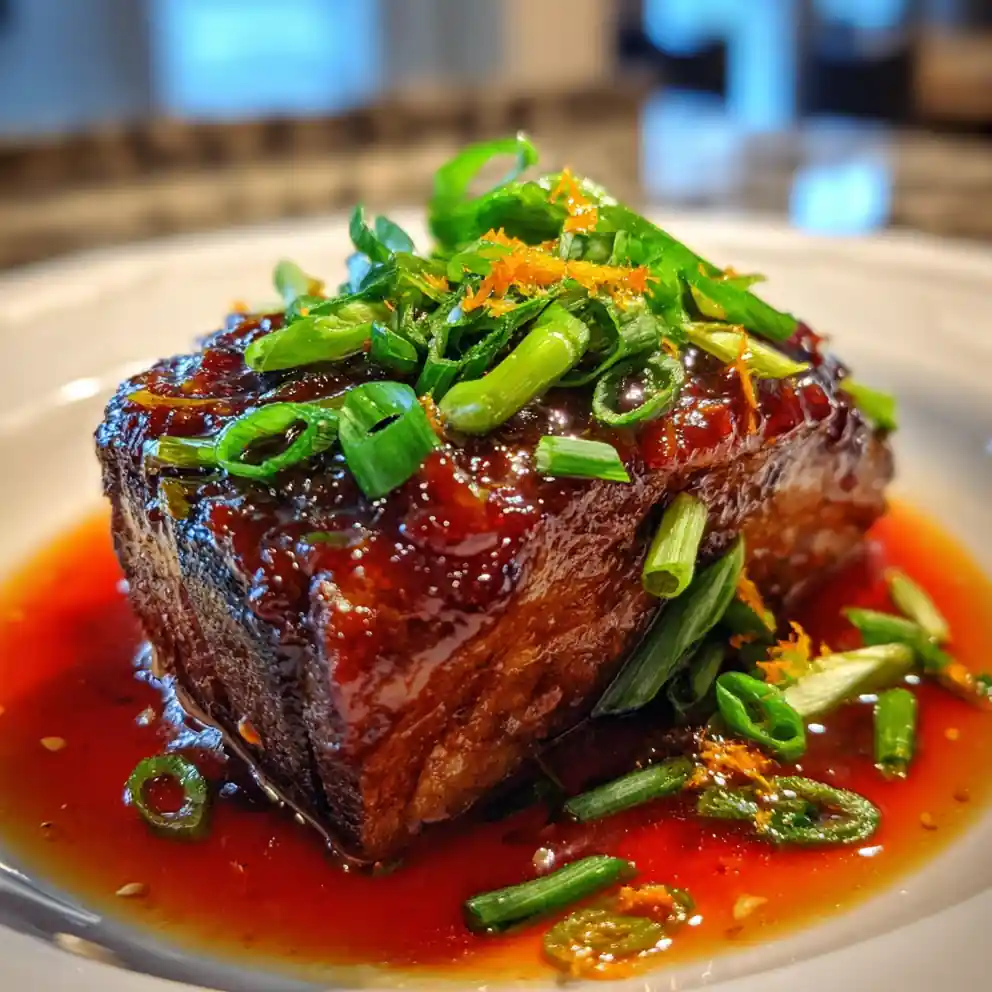
I love making a good braised dish, especially when I need an easy dinner idea for a cold night, but I sometimes find myself craving something brighter than traditional recipes offer. This specific braised asian beef short ribs recipe delivers exactly that, creating a rich, deeply savory dish that’s finished with a vibrant, spicy tangerine glaze. We’re taking rich, fork-tender beef and coating it in a vibrant, slightly spicy glaze that gets its sweetness and acidity from fresh tangerine juice. The braising process for these asian beef short ribs is mostly hands-off, letting the oven do the hard work for a truly effortless Sunday dinner or special occasion meal. This healthy, high-protein recipe for asian beef short ribs avoids a lot of added sugar by letting the fruit shine, making it feel fresh and comforting at the same time. This family-friendly preparation of asian beef short ribs is a favorite in my house.
Ingredients
- 1.5 kg (3.3 lbs) bone-in beef short ribs: Look for bone-in short ribs, cut into 2-inch pieces, for the best flavor and texture. Ensure they have good marbling for tender results. This high-protein cut is essential for this rich asian beef short ribs recipe.
- 2 tablespoons (30 mL) neutral cooking oil: Use an oil with a high smoke point, such as grapeseed, canola, or vegetable oil, for searing. This ensures a clean sear on the ribs.
- 1 teaspoon (5 mL) fine sea salt, plus more to taste: Adjust the amount depending on the saltiness of your beef stock and soy sauce. Season generously before searing to build flavor from the start.
- ½ teaspoon (2.5 mL) black pepper, freshly ground, plus more to taste: Freshly ground pepper provides a sharper aroma and better flavor.
- 2 tablespoons (30 mL) fresh ginger, grated: Grate or finely mince fresh ginger to fully release its pungent, aromatic oils into the braising liquid. This is a key aromatic component of the Asian flavor profile.
- 6 cloves (30 mL) garlic, minced: Finely mince the garlic to integrate smoothly into the sauce base. Avoid pre-minced jarred garlic for best flavor.
- 2 medium (100 g) shallots, finely diced: Shallots provide a milder, sweeter base note than onions, complementing the tangerine glaze without overpowering it.
- 120 mL (½ cup) alcohol-free soy sauce: Use a low-sodium version if preferred to better control the final seasoning. Ensure it’s alcohol-free to prevent any bitter notes in the long braise.
- 700 mL (2¾ cups) beef stock: Use high-quality beef stock for a rich umami base. Ensure the ribs are mostly submerged in the liquid.
- 120 mL (½ cup) fresh tangerine juice (from 2-3 tangerines): Fresh juice is essential for the bright, clean acidity that cuts through the rich beef fat. (You can substitute with orange juice if tangerines are unavailable, but tangerines offer a unique, slightly floral sweetness.)
- 3 tablespoons (45 mL) gochujang (Korean chili paste): Gochujang provides the mild heat, fermenty depth, and vibrant color characteristic of this glaze. Adjust this amount to match your preferred level of spice.
- 3 tablespoons (45 g) light brown sugar, packed: The sugar balances the gochujang’s heat and the soy sauce’s saltiness. Brown sugar adds a deeper caramel note compared to white sugar.
- 1 tablespoon (15 mL) toasted sesame oil: Add toasted sesame oil to the sauce base to enhance the nutty, earthy undertones.
- 1 tablespoon (15 mL) rice vinegar: Rice vinegar brightens the overall flavor profile and provides a necessary acidity to balance the richness.
- 1 tablespoon (15 mL) cornstarch + 2 tablespoons (30 mL) cold water: Required to form the thickening slurry. The water must be cold to prevent clumping.
- 2 stalks scallions, thinly sliced, for garnish: Garnish with fresh scallions for a pop of color and a fresh, oniony finish.
- Zest from 1 fresh tangerine, for garnish: Finishing with fresh tangerine zest provides a bright, aromatic punch that emphasizes the citrus note in the glaze.
Optional (plan-ahead): If you’re shopping for the week, I put this into a 4-Week Meal Plan + Grocery Lists so dinner’s already decided before your day gets busy.
Instructions
- Prep and Sear the Short Ribs: Pat the beef short ribs thoroughly dry with paper towels; season generously on all sides with salt and black pepper. Heat the neutral cooking oil in a large oven-safe Dutch oven or heavy-bottomed pot over medium-high heat. Once shimmering, carefully add the seasoned short ribs in batches, without crowding, and sear until deeply browned on all sides, about 3-5 minutes per side. Remove the seared ribs from the pot and set aside on a plate.
- Sauté Aromatics: Reduce the heat to medium. Add the grated ginger, minced garlic, and finely diced shallots to the pot. Sauté, stirring frequently, for 2-3 minutes until fragrant and softened, taking care not to burn the aromatics.
- Build the Braising Liquid: Pour in the alcohol-free soy sauce, beef stock, fresh tangerine juice, gochujang, light brown sugar, toasted sesame oil, and rice vinegar. Bring the mixture to a simmer, scraping the bottom of the pot with a wooden spoon to loosen any browned bits.
- Braise the Ribs: Return the seared short ribs to the pot, ensuring they are mostly submerged in the braising liquid. Bring the liquid back to a gentle simmer, then cover the Dutch oven tightly with its lid. Transfer the covered Dutch oven to a preheated oven at 160°C (325°F) and braise for 2.5 to 3 hours, or until the short ribs are fork-tender and easily pull away from the bone. I like to check these at the 2.5-hour mark because my oven runs hot, ensuring I don’t overcook them.
- Thicken the Glaze: Carefully remove the Dutch oven from the oven. Using tongs, transfer the cooked short ribs to a platter and tent loosely with aluminum foil to keep warm. Allow the braising liquid to settle for a few minutes, then use a spoon to skim off any excess fat from the surface. In a small bowl, whisk together the cornstarch and cold water to form a smooth slurry. Place the Dutch oven with the skimmed braising liquid over medium heat on the stovetop. Bring to a gentle simmer, then slowly whisk in the cornstarch slurry. Continue to cook, whisking constantly, for 2-3 minutes until the sauce thickens to a glossy glaze consistency. If the glaze seems too thick after adding the slurry, add a splash of reserved beef stock to thin it out slightly.
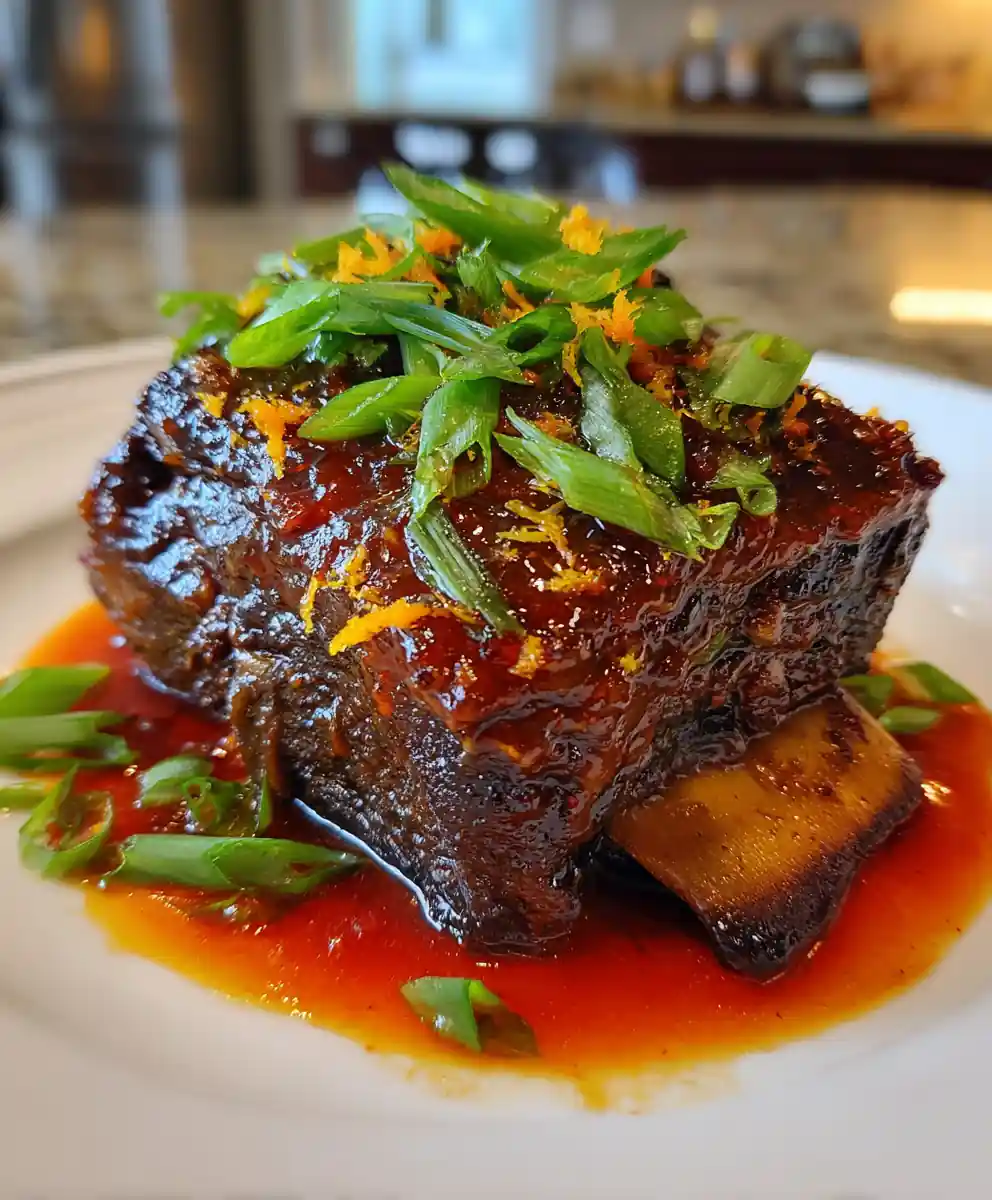
- Finish and Serve: Return the short ribs to the pot, turning them to thoroughly coat each piece with the rich, glossy Spicy Tangerine Glaze. Allow them to simmer in the glaze for 5 minutes to heat through and absorb more flavor. To serve, arrange the glazed short ribs over a bed of fluffy white rice. Spoon the glossy glaze over the ribs and sprinkle generously with bright green thinly sliced scallions and the vibrant orange fresh tangerine zest.
Serving Suggestions for Asian Beef Short Ribs
This rich and complex asian beef short ribs recipe pairs well with a variety of side dishes. The key is to select something that will either soak up the glossy glaze or provide a fresh, contrasting texture.
- Fluffy white rice: The classic choice for absorbing all the extra sauce and juice from the short ribs.
- Creamy mashed potatoes: For a comforting, non-traditional take that soaks up the braising liquid beautifully.
- Soba noodles or ramen noodles: Toss noodles directly in the glaze just before serving for a complete meal.
- Steamed vegetables: Serve alongside quick-steamed broccoli, bok choy, or green beans for a fresh contrast that cuts through the richness.
Make-Ahead and Storage Tips
Asian beef short ribs are fantastic for make-ahead meals; the flavor actually deepens overnight in the refrigerator. To make ahead, follow the braising steps (Step 1-4). Cool completely, cover, and refrigerate. The next day, skim the solidified fat from the top before reheating and thickening the glaze (Step 5-6).
For longer storage, freeze the cooked short ribs and glaze in an airtight container for up to 3 months. Thaw overnight in the refrigerator before reheating gently on the stovetop. I usually make these asian beef short ribs on a Saturday, then refrigerate the pot overnight. The next day, it’s easy to lift off the solid fat layer before reheating and finishing the glaze.
FAQs
How do I get my short ribs truly tender?
The key to tender asian beef short ribs is low-and-slow braising. If your short ribs aren’t fork-tender after 3 hours, simply return them to the oven for another 30-60 minutes until they easily pull apart. The longer braise time allows the connective tissue to break down completely.
Can I use boneless short ribs for this recipe?
Yes, boneless short ribs work well, but you may need to reduce the braising time by 30-45 minutes. They won’t have quite the same rich flavor as bone-in cuts, but they’re still delicious in this savory glaze. Always monitor them closely to ensure they don’t overcook and dry out.
What can I use instead of gochujang?
You can substitute sriracha, but it will have a different flavor profile; start with 1 tablespoon and add more to taste. For less spice, use a non-spicy red miso paste for depth and umami. I’ve found that a non-spicy red miso provides a similar fermentation depth to the gochujang, without the heat.
How do I make this recipe in a pressure cooker?
Sear the ribs as directed in Step 1. Sauté aromatics in Step 2, then add liquids and return ribs to pot in Step 3. Pressure cook on high for 40 minutes, followed by a natural release. Thicken the sauce as directed in step 5. This method significantly cuts down on cooking time for busy weeknights.
Why do I need to skim the fat?
Short ribs contain a lot of fat. Skimming it before thickening the glaze prevents the final sauce from being overly greasy and heavy, resulting in a cleaner, more pleasant mouthfeel. It also helps the glaze adhere better to the short ribs, rather than sliding off due to excess oil.
Can I use a different citrus fruit in this asian beef short ribs recipe?
Oranges or blood oranges can be used as a substitute for tangerines. However, tangerines provide a slightly sweeter and more floral note, which pairs exceptionally well with the gochujang. If substituting, ensure you use fresh juice for the best bright flavor to cut through the rich beef.
Conclusion
This easy braised asian beef short ribs recipe proves that comfort food can be both rich and vibrant. The combination of tender beef and the unique spicy tangerine glaze offers a fresh take on a classic for family dinners. Make this dish next weekend to impress your family and enjoy the simple pleasure of fork-tender beef; save this recipe to your favorite Pinterest board for later inspiration!
Print
asian beef short ribs recipe
- Total Time: 200 minutes
- Yield: 6 servings 1x
- Diet: General
Description
A rich, savory braised Asian beef short rib recipe finished with a vibrant, spicy tangerine glaze for a comforting and high-protein main course.
Ingredients
- 1.5 kg (3.3 lbs) bone-in beef short ribs, cut into 2-inch pieces
- 2 tablespoons neutral cooking oil
- 1 teaspoon fine sea salt, plus more to taste
- 0.5 teaspoon black pepper, freshly ground, plus more to taste
- 2 tablespoons fresh ginger, grated
- 6 cloves garlic, minced
- 2 medium shallots, finely diced
- 0.5 cup (120 mL) alcohol-free soy sauce
- 2.75 cups (700 mL) beef stock
- 0.5 cup (120 mL) fresh tangerine juice (from 2–3 tangerines)
- 3 tablespoons gochujang (Korean chili paste)
- 3 tablespoons light brown sugar, packed
- 1 tablespoon toasted sesame oil
- 1 tablespoon rice vinegar
- 1 tablespoon cornstarch
- 2 tablespoons cold water
- 2 stalks scallions, thinly sliced, for garnish
- Zest from 1 fresh tangerine, for garnish
Optional (plan-ahead): If you’re shopping for the week, I put this into a 4-Week Meal Plan + Grocery Lists so dinner’s already decided before your day gets busy.
Instructions
- Prep and Sear the Short Ribs: Pat the beef short ribs thoroughly dry with paper towels; season generously on all sides with salt and black pepper. Heat the neutral cooking oil in a large oven-safe Dutch oven over medium-high heat. Add the seasoned short ribs in batches and sear until deeply browned on all sides, about 3-5 minutes per side. Remove the seared ribs from the pot and set aside on a plate.
- Sauté Aromatics: Reduce the heat to medium. Add the grated ginger, minced garlic, and finely diced shallots to the pot. Sauté for 2-3 minutes until fragrant and softened, taking care not to burn the aromatics.
- Build the Braising Liquid: Pour in the alcohol-free soy sauce, beef stock, fresh tangerine juice, gochujang, light brown sugar, toasted sesame oil, and rice vinegar. Bring the mixture to a simmer, scraping the bottom of the pot to loosen any browned bits.
- Braise the Ribs: Return the seared short ribs to the pot, ensuring they are mostly submerged in the braising liquid. Bring the liquid back to a gentle simmer, then cover the Dutch oven tightly with its lid. Transfer the covered Dutch oven to a preheated oven at 160°C (325°F) and braise for 2.5 to 3 hours, or until the short ribs are fork-tender and easily pull away from the bone.
- Thicken the Glaze: Carefully remove the Dutch oven from the oven. Using tongs, transfer the cooked short ribs to a platter and tent loosely with aluminum foil to keep warm. Allow the braising liquid to settle for a few minutes, then skim off any excess fat from the surface. In a small bowl, whisk together the cornstarch and cold water to form a smooth slurry. Place the Dutch oven with the skimmed braising liquid over medium heat on the stovetop. Bring to a gentle simmer, then slowly whisk in the cornstarch slurry. Continue to cook, whisking constantly, for 2-3 minutes until the sauce thickens to a glossy glaze consistency.
- Finish and Serve: Return the short ribs to the pot, turning them to thoroughly coat each piece with the rich glaze. Allow them to simmer in the glaze for 5 minutes to heat through. To serve, arrange the glazed short ribs over a bed of fluffy white rice, spooning extra glaze over the top. Garnish generously with thinly sliced scallions and fresh tangerine zest.
Notes
To control sodium, use low-sodium soy sauce. If fresh tangerines are unavailable, orange juice can be substituted, but tangerines provide a unique floral sweetness. Leftovers can be stored in an airtight container in the refrigerator for up to 3 days.
- Prep Time: 20 minutes
- Cook Time: 180 minutes
- Category: Main Course
- Method: Braising
- Cuisine: Asian
Nutrition
- Serving Size: 1 serving (~200g)
- Calories: 560 calories
- Sugar: 10 g
- Sodium: 1050 mg
- Fat: 34 g
- Saturated Fat: 15 g
- Unsaturated Fat: 15 g
- Trans Fat: 0 g
- Carbohydrates: 13 g
- Fiber: 1 g
- Protein: 40 g
- Cholesterol: 115 mg
FREE PRINTABLE RECIPE
Get the Printable Recipe PDF (Free)
Enter your email and we’ll send you the ingredients + step-by-step instructions as a clean PDF you can save to your phone.
- ✅ Printable PDF (ingredients + steps)
- ✅ Save it to your phone (no long scrolling)
- ✅ Includes cook time + servings
- ✅ Easy to follow
FAQ
Where’s the full recipe?
It’s delivered as a printable PDF so you can save it and cook without scrolling.
I didn’t get the email.
Check Spam/Promotions and search your inbox for your site name. Then click Confirm to receive the PDF.